


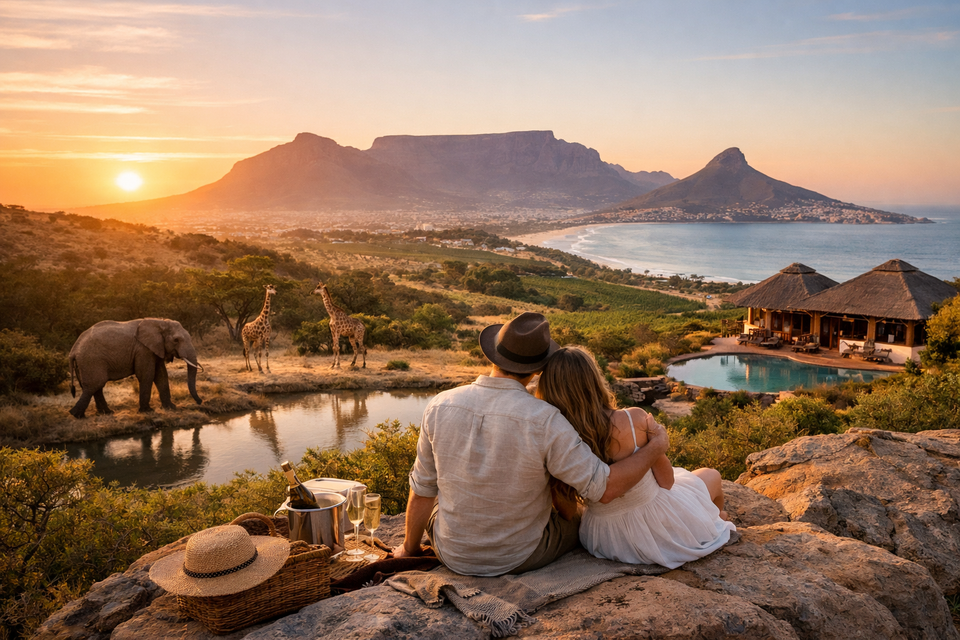
A honeymoon in South Africa can combine a Cape Town city break, quiet vineyard stays, wildlife drives, and Indian Ocean beaches in one trip. For a balanced itinerary, allow several nights in each region rather than rushing between daily flights, hotel changes, and long road transfers.

Cape Town can be the starting point for a honeymoon that also includes the Winelands, safari, and the coast.
Start in Cape Town with sunset views, coastal drives, and relaxed dinners, then spend two or three nights in the Winelands around Stellenbosch or Franschhoek. Add a safari in Kruger National Park or a private reserve, where early-morning and late-afternoon game drives shape the daily schedule. If time allows, finish with warm-weather beach days in KwaZulu-Natal or continue to the Garden Route for forests, lagoons, and small coastal towns.
Plan around the experience you value most. Wildlife viewing, beach weather, whale watching, and vineyard scenery follow different seasonal patterns. Also check transfer times, malaria considerations for your safari area, baggage limits on small aircraft, and whether lodges include meals and game drives. Before departure, arrange a South Africa eSIM for navigation and reservations, and leave a little unscheduled time—honeymoons feel more memorable when every morning is not governed by a checklist.
Is South Africa the Right Honeymoon Destination for You?
A honeymoon in South Africa suits couples who want variety rather than a single-resort escape. One trip can combine wildlife viewing, vineyard stays, beaches, mountain scenery, and sophisticated city dining. It is particularly appealing if you both enjoy active days followed by private, comfortable evenings.
The destination works best for couples willing to plan around travel distances and regional conditions. Safari areas, coastal towns, and wine regions are spread out, so changing hotels every night can become tiring. Weather also varies by region, while some northeastern safari destinations require malaria precautions; review practical South Africa travel health guidance before choosing your route.
Choose South Africa if: You want safari, food, scenery, and outdoor experiences in one itinerary.
Think carefully if: You prefer minimal transfers, guaranteed tropical beach weather, or an entirely resort-based stay.
Plan a slower route if: Privacy and downtime matter more than checking off multiple regions.
Couples with different interests can also find a good balance here: one partner might prioritize wildlife and hiking, while the other prefers spa time, restaurants, or scenic drives. The strongest honeymoon itineraries usually focus on two or three complementary areas instead of trying to cover the entire country.
When Is the Best Time for a South Africa Honeymoon?
The best time depends on where you plan to go. For a honeymoon in South Africa that combines Cape Town, the Winelands, and the coast, November through March brings warm summer weather and long evenings. December and January are especially busy, so reserve popular hotels, restaurants, and activities well ahead.
For wildlife viewing in northeastern safari regions, May through September is often the strongest window. Cooler, drier conditions thin the vegetation, and animals tend to gather near reliable water sources. Early mornings can be cold on open vehicles, so pack layers. When choosing a South Africa safari itinerary, allow at least three nights in one reserve rather than changing camps every day.
Shoulder months can offer the best balance for couples visiting several regions. April and May bring milder temperatures around Cape Town and pleasant conditions in the Winelands, while September and October combine spring scenery in the southwest with good safari opportunities farther north. June through November is also the main period for spotting migrating southern right whales along the Western Cape coast. Whatever month you choose, build the trip around regional weather rather than expecting identical conditions nationwide.
Where Should Honeymooners Go in South Africa?
For a first honeymoon in South Africa, combine Cape Town, the Cape Winelands, and a safari reserve. Cape Town offers beaches, mountain views, acclaimed restaurants, and easy day trips. Spend three or four nights there, followed by two nights in Franschhoek or Stellenbosch for vineyard lunches and a slower pace.
Next, choose between the Garden Route and safari country. The Garden Route suits couples who enjoy self-driving, coastal scenery, forests, and small towns; allow at least three nights rather than rushing between stops. For wildlife, compare private reserves with national-park stays, considering the setting, accommodation, drive format, and overall pace.
Honeymoon style | Strong destination pairing |
|---|---|
Food and scenery | Cape Town and the Winelands |
Road trip and coast | Cape Town and the Garden Route |
Wildlife and relaxation | Safari reserve and Winelands |
Couples with more time can add the Drakensberg for hiking and mountain lodges or KwaZulu-Natal for warm-water beaches and wildlife areas. Avoid packing every region into one trip: two or three bases over 10 to 14 days leave room for long breakfasts, spa time, and unplanned afternoons together.
How Many Days Do You Need? Compare 7-, 10-, and 14-Day Itineraries
Seven days works for a focused honeymoon in South Africa. Choose two bases rather than racing across the country: for example, spend three nights in Cape Town, two in the Winelands, and two at a nearby private reserve. Keep transfers short and avoid booking major activities on arrival day.
Ten days offers the best balance for many couples. You could combine four nights around Cape Town and the Winelands with three nights on safari, leaving time for travel and one unstructured day. A three-night safari provides several game drives without making the trip feel dominated by early starts. Before choosing a reserve, compare its setting, wildlife focus, and daily pace.
Fourteen days allows for three distinct experiences at a relaxed pace. Pair the Cape with a four-night safari and several nights along the coast, or add a quieter countryside stay. Two weeks also gives you room for weather-related changes, spa time, long lunches, and a genuine rest day—valuable after a wedding and long-haul flight.
Whichever length you choose, count nights rather than calendar days. International arrival and departure days rarely provide enough time for ambitious sightseeing.
How Do You Plan a Romantic Safari Honeymoon?
Build your safari honeymoon around three or four nights in one reserve. That gives you several morning and evening game drives without making wildlife viewing feel rushed. Choose a lodge with small-group drives, private dining options, and a room with a deck or plunge pool. If privacy matters most, ask whether vehicles have limited seating and whether a private drive can be arranged.
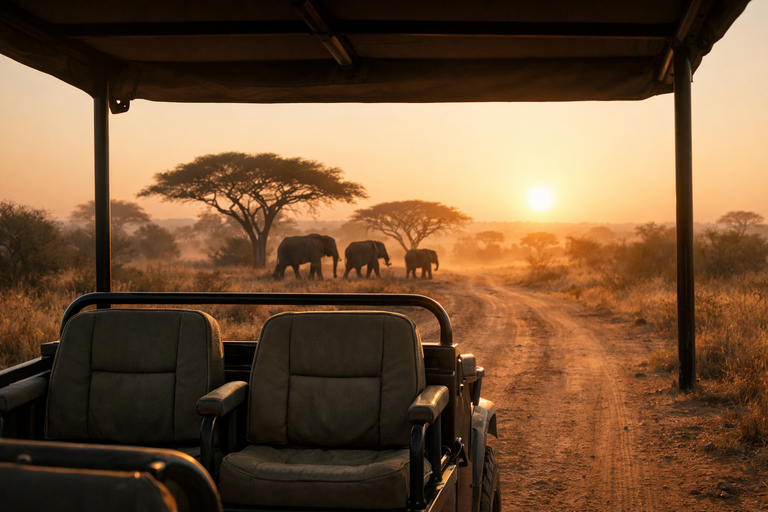
Several nights in one reserve leave room for relaxed morning and evening game drives.
Plan one special experience rather than filling every hour. A sunset stop, bush breakfast, couples’ spa treatment, or private dinner can make the trip feel celebratory while leaving time to relax between drives. Pack neutral layers for cool mornings, a warm jacket, sun protection, and one smart-casual outfit for dinner. Avoid scheduling a long road transfer immediately after an early drive.
Compare safari locations carefully. A private reserve may offer guided off-road sightings and fewer vehicles, while a national-park stay can provide more flexibility and a wider choice of accommodations. Confirm what the rate includes, especially transfers, meals, drinks, park fees, and game-drive schedules.
Finally, tell the lodge it is your honeymoon before arrival—but specify what you actually enjoy. A quiet table and unhurried afternoon may be more romantic than staged decorations or a packed itinerary.
Where Should You Stay for Privacy, Luxury, and Memorable Views?
For a honeymoon in South Africa, prioritize the room itself rather than choosing solely by hotel rating. Look for a private terrace, plunge pool, outdoor shower, fireplace, or freestanding tub. In Cape Town, an ocean-facing suite around Camps Bay or the Atlantic Seaboard delivers sunset views; hillside properties generally feel more secluded than busy waterfront hotels.
In the Winelands, choose a vineyard estate near Franschhoek or Stellenbosch with mountain views and an on-site restaurant. A cottage or detached suite offers more privacy than a room in the main building. Ask whether the terrace faces paths, parking areas, or other rooms before booking.
On safari, a smaller lodge or tented camp can feel especially intimate. Request a suite at the end of a boardwalk, away from communal spaces and service areas. Confirm whether the rate includes game drives, meals, drinks, transfers, and private dining; these details matter more than decorative extras.
Consider splitting the trip among three distinct stays: a design-led city hotel, a quiet wine-estate suite, and a private safari lodge. Before leaving, arrange mobile data for coordinating transfers and contacting properties. An eSIM can be a convenient option, but remote lodges may still have limited reception.
What will a honeymoon in South Africa cost?
Your total depends more on how you travel than on the country itself. A self-drive trip with guesthouses and one short safari costs far less than a multi-lodge fly-in safari with private guides, but the rand’s exchange rate can give US travelers strong value if you avoid December school holidays. Internal flights, park entry fees, and premium Winelands stays add up quickly, so list those before comparing packages.
Accommodation is usually the biggest line item. Private safari lodges in reserves like the Sabi Sands charge more than national park rest camps, and a suite with a plunge pool costs more than a standard tented room. Cape Town and the Winelands vary by season, with sea-view rooms at their priciest in January. Meals, car rental, and tips often catch couples off guard.
Smaller costs are easier to control. Book local flights early, choose one reserve instead of two, and consider an eSIM instead of paying roaming fees for maps, reservations, and lodge confirmations. It will not make or break the trip, but it is a simple expense to review before you arrive.
How Can You Combine South Africa and Namibia in One Trip?
For a well-paced two-country honeymoon, allow about 14 days. One practical route is four nights in Cape Town, followed by a flight to Windhoek and a Namibian road trip: three nights near Sossusvlei, two in Swakopmund, and three around Etosha National Park. Keep the remaining nights as travel buffers or add them to the places where you want more privacy and downtime.
Flying between countries is usually more relaxing than driving the entire distance. In Namibia, a rental car gives you flexibility, but distances are long and many roads are gravel. Avoid planning major drives after sunset, confirm whether your rental agreement permits gravel-road travel, and carry water, offline directions, and a spare tire. If you take a South African rental vehicle across the border, request written permission and confirm insurance, documentation, and one-way return conditions before booking.
The contrast makes this pairing especially memorable: South Africa provides restaurants, vineyards, coastal scenery, and safari options, while Namibia adds immense dunes, desert lodges, and exceptionally quiet landscapes. Book an open-jaw itinerary so you arrive in one country and depart from the other rather than backtracking. If using an eSIM, verify that your plan covers both countries; otherwise, arrange separate Namibia coverage before departure.
What Should Couples Know About Safety, Health, and Transportation?
For a safe honeymoon in South Africa, use the same practical precautions you would in any unfamiliar city. Keep phones and jewelry out of sight while walking, leave passports in the hotel safe, and ask your accommodation which streets to avoid after dark. Arrange a transfer rather than walking with luggage at night, and do not leave bags visible in a parked car.
Discuss your route with a travel clinic before departure, especially if it includes Kruger National Park or other northeastern lowveld areas where malaria precautions may be recommended. Pack prescription medicine in your carry-on, use insect repellent, and confirm that your travel insurance covers medical treatment and evacuation. Review guidance on South African travel health, vaccines, and diseases before finalizing the trip.
Driving gives couples flexibility, but traffic travels on the left and rural journeys often take longer than expected. Avoid driving after dark, when unlit roads, animals, and potholes are harder to spot. Keep daily driving legs below about four hours when possible, refuel before remote stretches, and download directions in advance. For wine-country outings or evenings involving alcohol, book a private driver or accommodation transfer instead.
How Will You Stay Connected With an eSIM in South Africa?
An eSIM provides mobile data without requiring you to replace your physical SIM card. Before purchasing one for South Africa, confirm that your phone supports the technology and is carrier-unlocked. Install the plan over reliable Wi-Fi before departure, but check its activation rules: some plans begin when installed, while others start only after connecting to a supported network.
After landing, select the eSIM for mobile data and enable data roaming for that line if the provider’s instructions require it. Label each line clearly, such as “Home” and “South Africa,” so you do not accidentally use expensive international roaming. You can keep your usual number active for calls or verification texts, but disable data switching to prevent unintended charges.
For a honeymoon, each partner should have a separate data plan rather than relying entirely on one phone’s hotspot. That way, you can contact each other if you separate at an airport, vineyard, hotel, or safari lodge. Download booking confirmations, driving directions, and lodge contact details before traveling into rural areas, where reception may be limited or unavailable. Save the eSIM installation details somewhere accessible offline in case you need to troubleshoot or reinstall the plan.
What Should You Pack for Safaris, Cities, Beaches, and Wine Country?
Pack light layers rather than separate wardrobes for every stop. Safari drives can begin in chilly, dark conditions and become warm by midday, so bring a fleece or light insulated jacket, breathable shirts, long pants, and closed-toe shoes. Choose neutral colors, but skip military-style camouflage. A soft-sided bag is easier to handle on small safari transfers than a rigid suitcase.
For cities and wine country, add smart-casual outfits suitable for restaurants and tastings, plus comfortable walking shoes. A compact rain jacket is useful, while a light sweater handles cool evenings and air-conditioned interiors. Beach stays call for swimwear, sandals, a cover-up, and reef-conscious sunscreen. Pack a wide-brimmed hat, sunglasses, and a reusable water bottle for every part of your honeymoon in South Africa.
Keep medications, travel documents, chargers, and one change of clothes in your carry-on. Bring binoculars for shared wildlife viewing, a plug adapter compatible with South African outlets, and a small power bank for long drives. Include insect repellent and any prescribed medication after reviewing practical guidance on South Africa travel health, vaccines, and diseases. Leave valuable jewelry at home and use a compact day bag that closes securely.
How far ahead should we book our honeymoon?
Aim to reserve flights and sought-after safari lodges 9–12 months ahead, especially for holiday periods or small camps with few rooms. Confirm the safari first, then arrange city stays and road-trip stops around those fixed dates.
Can we combine a safari, wine country, and the coast without rushing?
Yes, but allow at least 10 days and avoid changing hotels every night. A comfortable plan might include three or four safari nights, two wine-country nights, and four coastal or city nights. For help comparing wildlife experiences, review these South Africa safari tours before choosing a region.
Should we tell hotels and lodges that we are honeymooners?
Yes. Mention your honeymoon when booking and again before arrival. Properties may help arrange a private dinner, scenic picnic, couples’ treatment, or room with extra privacy, although complimentary upgrades should never be assumed. Ask about costs and weather backup plans in advance.
Is it better to plan everything ourselves or use a specialist?
Independent planning suits straightforward city and driving itineraries. A specialist can be useful when coordinating remote lodges, charter flights, or multiple border crossings. Either way, keep confirmation numbers, transfer details, and emergency contacts together.
A memorable honeymoon in South Africa needs breathing room: choose fewer places, stay longer, and leave one unscheduled day for rest or spontaneity.
