
vaccinations needed for south africa — Wondering which inoculations you need for South Africa ? This 2026 guide covers every recommended vaccine and vaccination — yellow fever, hepatitis A and B, typhoid, MMR, rabies, meningococcal — plus malaria risk zones, HIV awareness, water safety, and what to take in a medical emergency. South Africa is one of Africa's most visited countries, home to Kruger National Park,
the Cape Winelands and the Garden Route — but it carries real health risks every traveller must understand before they board.
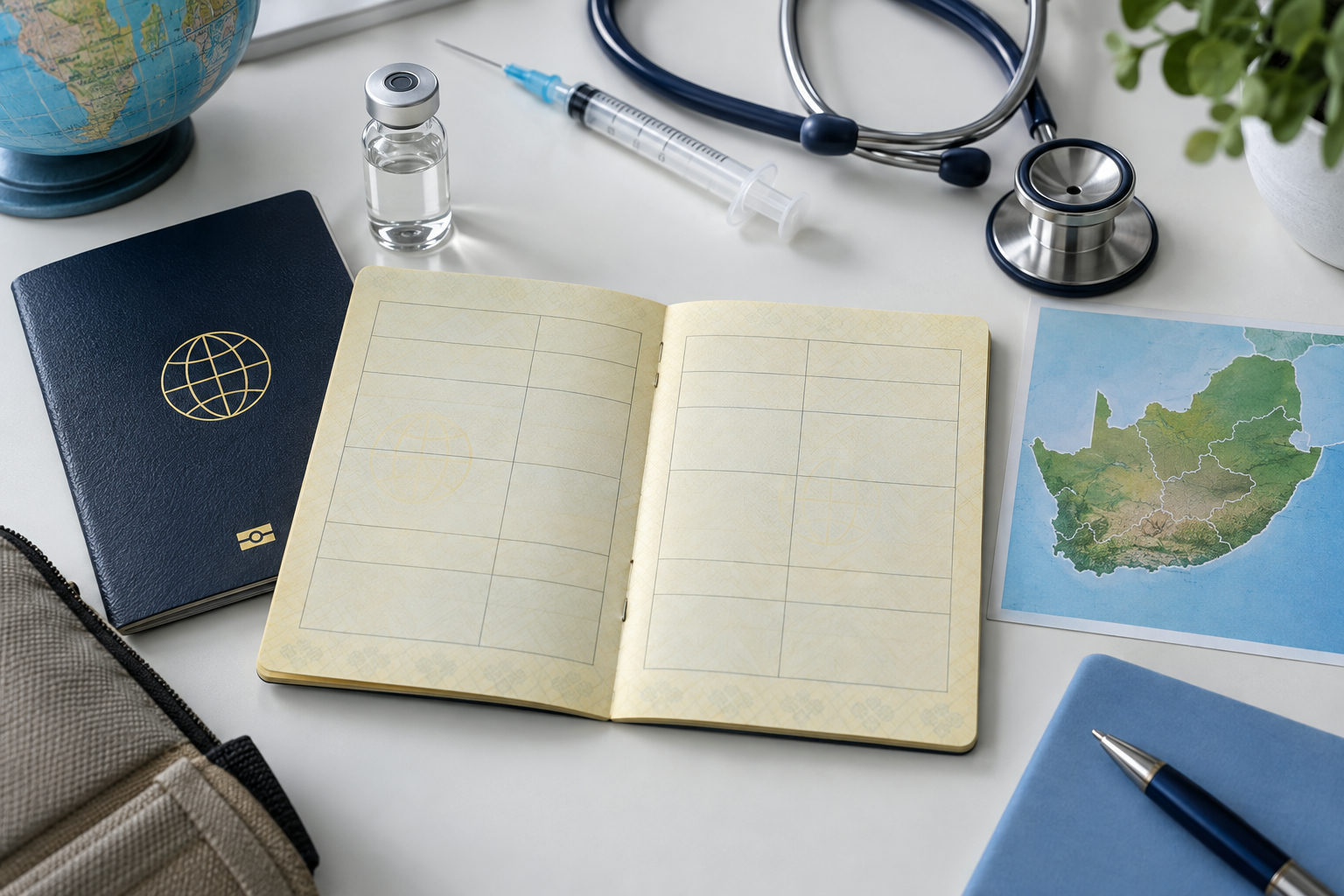
Plan travel vaccinations well before departure to South Africa.
💉 What Vaccines Are Required and Recommended for South Africa?
South Africa does not require most travellers to have specific vaccines for entry, but several vaccinations are strongly recommended based on your travel plans and medical history. Here is the essential vaccine information for this country.
⚠️ Yellow Fever Vaccine Certificate Required
If you are arriving in South Africa from a yellow fever endemic country (most of sub-Saharan Africa, parts of South America), you must carry a valid International Certificate of Vaccination or Prophylaxis (ICVP / "Yellow Card"). Without it, you may be denied entry into the country or forced to vaccinate at the border. Contact your local travel health clinic for vaccination information years before travel if possible.
Routine Vaccines — Make Sure You're Up to Date
Make sure your routine vaccines are current before travelling to South Africa. These include measles-mumps-rubella (MMR), diphtheria-tetanus-pertussis, varicella (chickenpox), polio, and your yearly flu shot. The hepatitis A vaccine is recommended for most travellers, as you may be exposed to contaminated food or water. The hepatitis B vaccine is advised if you might have sexual contact, get a tattoo or piercing, or require medical treatment during your trip. Typhoid vaccine is recommended for those visiting smaller cities, villages, or rural areas where food and water may be contaminated. Rabies vaccine should be considered if you will be around animals or in remote areas where rabies treatment may not be readily available for 24 hours or more.
Vaccine | Why It Matters | Status |
|---|---|---|
Hepatitis A | Waterborne, transmitted via contaminated food/water. Risk across SA. | Strongly Recommended |
Hepatitis B | Blood/body fluid transmission. Especially if receiving medical care. | Recommended |
Typhoid | Contaminated water and food. Higher risk in townships and rural areas. | Recommended |
MMR (Measles, Mumps, Rubella) | SA has had measles outbreaks. Ensure 2 doses. | Required if unvaccinated |
Tetanus/Diphtheria/Pertussis | Standard booster every 10 years. | Required |
Polio | Low risk but ensure childhood series is complete. | Required |
Rabies | Present in wildlife. Recommended for safari, rural travel, or cave exploration. | Recommended for high-risk |
Meningococcal | Recommended for travellers visiting crowded areas or during outbreaks. | Consider |
Cholera | Rare for tourists but outbreaks occur in informal settlements. | Low priority |
Visit a travel health clinic or your GP at least 6–8 weeks before departure — some vaccines require multiple doses over several weeks. In the UK, NHS travel clinics and private providers like Tropic (formally Nomad Travel) offer these.
🦟 Where Is Malaria a Risk in South Africa, and How Can You Prevent It?
South Africa is not entirely malaria-free. The risk is concentrated in specific regions and varies significantly by season. Take anti-malarial medication if you plan to visit high-risk areas. Cape Town, Johannesburg, and the Western Cape have no malaria risk.
🔴 High-Risk Areas
Kruger National Park and surrounding lowveld
Limpopo province (esp. near Zimbabwe/Mozambique border)
Northern KwaZulu-Natal (iSimangaliso Wetland Park)
Mpumalanga (Sabie, Hoedspruit)
Risk highest: November–April (wet season)
🟢 Malaria-Free Areas
Cape Town & Western Cape
Johannesburg & Pretoria
Garden Route (George, Knysna, Plettenberg Bay)
Drakensberg mountains
Most of Eastern Cape
Anti-Malarial Medications
💊 Atovaquone/Proguanil (Malarone) Top choice
Most popular for SA. Start 1–2 days before, take during, finish 7 days after. Fewer side effects.
💊 Doxycycline Good alternative
Cheap and effective. Start 1–2 days before. Can cause sun sensitivity — use SPF50.
💊 Mefloquine (Lariam) Third option
Weekly dose. Can cause vivid dreams, anxiety. Not recommended for first-timers.
🛡️ Additional Prevention: Use DEET-based insect repellent (30–50%), sleep under a mosquito net if windows aren't screened, wear long sleeves at dusk, and ensure your accommodation is mosquito-proofed. If you develop fever, chills, or flu-like symptoms within 3 months of returning, seek medical attention immediately and tell the doctor you've been to a malaria zone.
🔴 HIV & AIDS: What Travellers Need to Know
South Africa has the largest HIV epidemic in the world. According to UNAIDS, approximately 7.8 million South Africans live with HIV (about 13% of the population). As a tourist, your personal risk is manageable — but you need to understand the facts.
🩸 How HIV is Transmitted
Unprotected sex
Sharing needles
Blood transfusions (rare in SA — screened)
Mother to child (not relevant to tourists)
🛡️ How to Protect Yourself
Use condoms consistently
Never share needles or syringes
Avoid unlicensed tattoo/piercing parlours
Use gloves if administering first aid
💊 PEP — If Exposed
Post-Exposure Prophylaxis (PEP) must start within 72 hours
Available at SA hospitals and clinics
28-day course of antiretrovirals
Effective if started immediately
Should You Get an HIV Test?
HIV testing before travel is sensible if you haven't been tested recently — especially before engaging with the healthcare system in SA. Many travellers also choose to get tested after returning home if they had any potential exposure. Testing in South Africa is widely available:
State clinics offer free, confidential HIV testing (VCT — Voluntary Counselling and Testing)
Private pharmacies (Clicks, Dis-Chem) sell rapid home HIV test kits (results in 15 minutes)
Most private hospitals offer testing with same-day results
PrEP (Pre-Exposure Prophylaxis) is available from travel clinics before your trip if you're at higher risk
Note for Medical Travellers: If you require surgery, dental work, or blood transfusions in South Africa, major private hospitals (Netcare, Life Healthcare, Mediclinic) follow strict blood screening protocols. Blood transfusion risk is very low in private facilities but higher in rural government hospitals.
🫁 Tuberculosis (TB)
South Africa has one of the highest TB burdens globally — around 300,000 new cases per year. Drug-Resistant TB (DR-TB) is also significant. For most short-term tourists, the risk is low — TB spreads through prolonged close contact in enclosed spaces (small poorly-ventilated rooms, crowded public transport for long periods).
Higher Risk Situations
Long stays in township areas
Volunteering in hospitals or clinics
Using minibus taxis (shared, unventilated)
Working with at-risk populations
Stays > 4 weeks
Precautions
Get a TB test (tuberculin skin test or IGRA blood test) before and after long trips
Wear N95 masks in crowded enclosed settings
Ensure you have BCG vaccination (given in childhood in most countries)
Seek medical advice if you develop persistent cough after returning
🦠 Other Disease Risks
Bilharzia (Schistosomiasis)
Medium Risk
Parasitic worm found in freshwater — rivers, lakes, streams. Do NOT swim in uncleared freshwater in Limpopo, KwaZulu-Natal, or Mpumalanga. Ocean and chlorinated pools are safe.
✅ Action: Avoid freshwater swimming. Get a blood test 6–8 weeks after potential exposure.
Rabies
Low-Medium Risk
Present in wildlife, dogs, and bats. Higher risk for those doing bush camping, cave exploration, or wildlife handling. Pre-exposure vaccines are recommended for safari travellers.
✅ Action: Get pre-exposure vaccine. If bitten — wash wound for 15 min, seek immediate medical care for post-exposure prophylaxis.
Ebola
Very Low Risk
South Africa is not an Ebola-endemic country. The nearest recent outbreaks were in DRC. The risk for South Africa tourists is negligible.
✅ Action: None required. Monitor WHO advisories if traveling north.
Dengue Fever
Low Risk
Sporadic cases occur. No vaccine approved for first-time exposure. Spread by daytime Aedes mosquitoes.
✅ Action: Use DEET repellent during the day.
Tick Bite Fever (African tick typhus)
Medium in bush areas Risk
Very common among safari-goers. Spread by ticks in long grass. Causes fever, headache, and a distinctive eschar (black spot at the bite site). Easily treatable with doxycycline.
✅ Action: Tuck trousers into socks in long grass. Do full body tick checks daily. If symptoms appear within 2 weeks of safari, see a doctor.
Cyclosporiasis / Traveller's Diarrhoea
Medium Risk
Caused by contaminated food or water. Very common in first-time Africa visitors.
✅ Action: Carry oral rehydration salts. Pack ciprofloxacin or azithromycin for treatment (prescribe with your GP beforehand).
🚰 Water & Food Safety
Tap water is generally safe in major cities (Cape Town, Johannesburg, Durban). However, infrastructure deteriorates in many towns, and water quality can be poor after heavy rains or in rural areas. When in doubt, drink bottled or filtered water.
Bottled water: widely available, ~R15–25 per 1.5L (about £0.65–£1.10)
Use bottled water for brushing teeth in remote areas
Avoid ice in drinks at informal restaurants
Carry water purification tablets or a SteriPen for safari/camping
Eat at established restaurants, lodges, and hotels — food hygiene is generally excellent
Be cautious with street food from informal traders — hot, freshly cooked food is safer
Avoid raw salads and unpeeled fruit from unknown sources
Seafood in Cape Town is excellent and safe at reputable restaurants
"Peel it, cook it, boil it, or forget it" rule applies in rural areas
🏥 Medical Facilities & Emergency Contacts
Private Hospitals (Excellent)
Netcare — nationwide, highest standard
Life Healthcare — Cape Town, JHB, Durban
Mediclinic — widely available
Equivalent to European private hospital quality
Expensive without insurance — R5,000–R50,000+ per day
Emergency Numbers
🚑 National Emergency: 10111 (police) / 10177 (ambulance)
🚁 Netcare 911: 082 911 (private ambulance)
🚁 ER24: 084 124 (private, excellent response)
🏥 Poison Centre: 0861 555 777
🌍 MASA (Medical Assistance): 0800 111 990
📍 Major Hospital Cities: Johannesburg (Milpark, Morningside Mediclinic), Cape Town (Mediclinic Constantiaberg, Groote Schuur), Durban (Entabeni, St Augustine's). If visiting Kruger, the nearest private facilities are in Phalaborwa, Hoedspruit, and Nelspruit (Mediclinic Nelspruit).
🛡️ Travel Insurance & Medical Evacuation
This is non-negotiable for South Africa. Medical costs at private hospitals are very high. A serious road accident or safari injury requiring helicopter evacuation and ICU care can cost £50,000–£200,000. Ensure your policy covers:
Must Have
Medical emergency cover (minimum £5M)
Medical evacuation and repatriation
Safari and game drive activities
Helicopter rescue if visiting remote parks
Coverage for high-risk activities (bungee, shark diving, skydiving)
Recommended Providers
World Nomads (popular with backpackers)
BUPA Global (comprehensive expat cover)
Allianz Travel Insurance
AXA Travel Guard
Check if your credit card includes travel cover
🎒 Health Packing Checklist
✓Anti-malarial medication (prescribed)
✓DEET insect repellent 30–50%
✓Sunscreen SPF 50+ (intense African sun)
✓Oral rehydration salts
✓Ciprofloxacin / Azithromycin (traveller's diarrhoea)
✓Imodium (loperamide)
✓Paracetamol & Ibuprofen
✓Antihistamine (bee stings, plant reactions)
✓Tick removal tool
✓Basic wound dressing kit
✓Medical information card (blood type, allergies)
✓Copies of prescriptions
✓Yellow fever certificate (ICVP)
✓Condoms (bring your own supply — reliable brands)
✓Water purification tablets