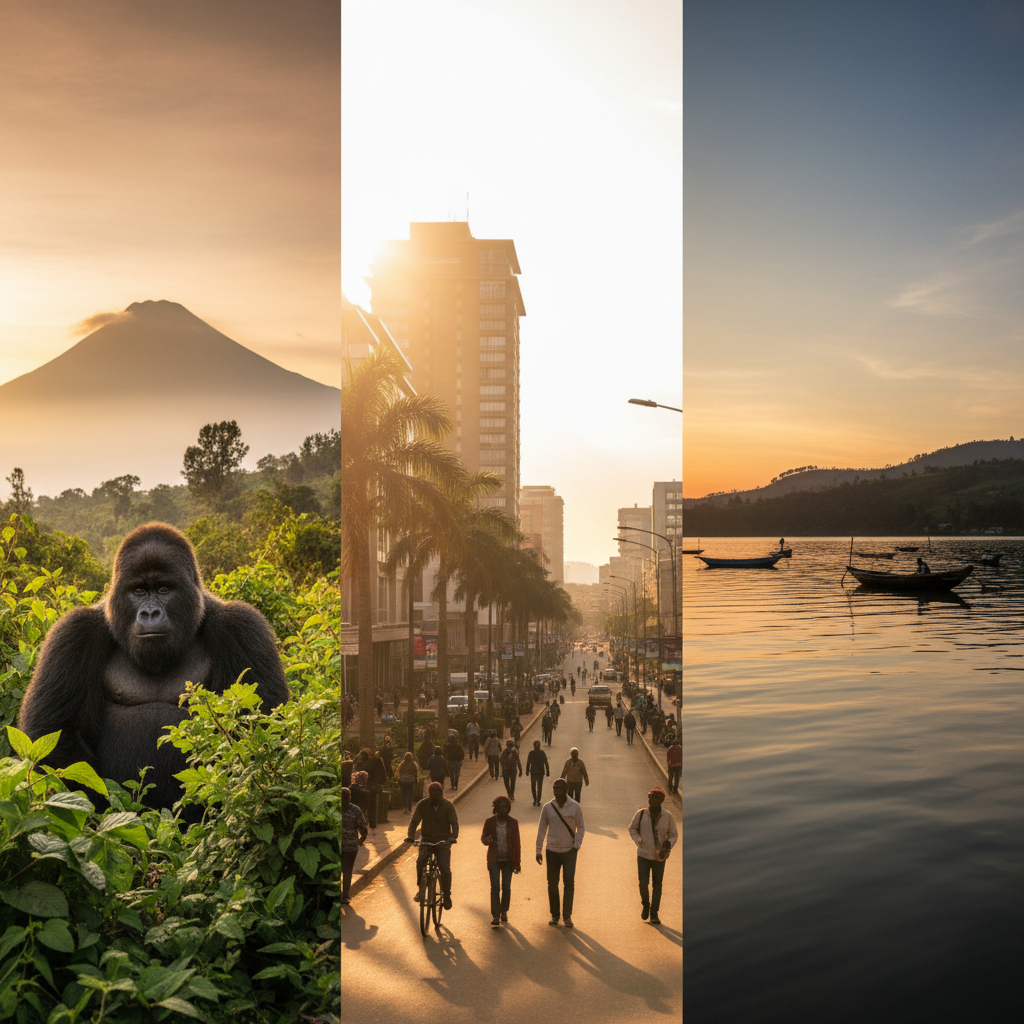
Rwanda has rebranded itself as Africa's premium short-break safari destination. A two-hour drive from Kigali airport puts you at the foot of the Virunga volcanoes; one hour later you can be locked eyes with a 200kg silverback. It's the most efficient gorilla trek on the continent — and the price ($1,500 per permit) reflects that.
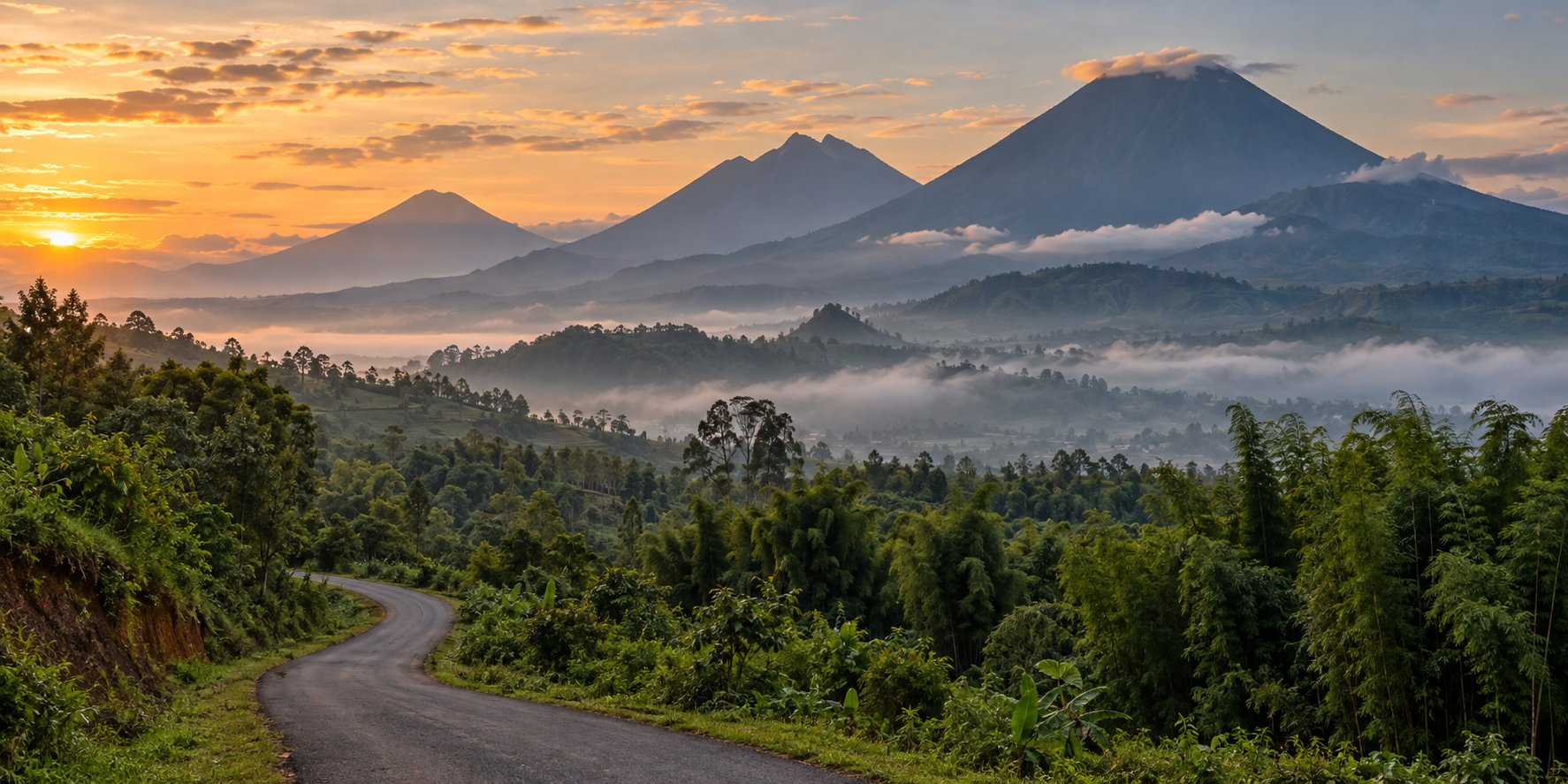
Volcanoes National Park is about a two-hour drive from Kigali.
Our four picks from Safari.com range from a 3-day weekend gorilla trek to an 11-day Rwanda-plus-Tanzania bucket-list combo. All include premium lodges, private guide, and permits.
Group size: Private safaris offer flexibility — you set the pace, choose departure dates, and customise the itinerary. Group departures (if available) are cheaper but run on fixed dates with shared vehicles. Most Rwanda safaris are private by default because gorilla permits are individual, not group-based, and lodges near Volcanoes cater to independent travellers rather than tour groups.
Budget considerations: The gorilla permit is fixed at $1,500, but lodge choice determines the rest. Budget lodges near Volcanoes start around $150/night, mid-range properties run $300–$600, and ultra-luxury options (Singita Kwitonda, One&Only Gorilla's Nest, Bisate) exceed $1,500/night. If the permit already stretches your budget, prioritise that and choose a comfortable but modest lodge — the gorilla encounter is identical regardless of where you sleep.
If you have 10+ days: Combine Rwanda with a neighbouring country. Rwanda-Tanzania (gorillas, then Serengeti and Ngorongoro) is the classic bucket-list pairing. Rwanda-Uganda (gorillas in both countries, plus chimps and Queen Elizabeth NP) works for primate specialists. Kenya can also be added for the Maasai Mara. These combos require internal flights to avoid two-day overland transfers.
If you have 5–7 days: Add a second park. The most popular combination is Volcanoes plus Akagera (gorillas plus Big Five). Alternatively, go deep on primates with Volcanoes and Nyungwe (gorillas and chimps). Include a night at Lake Kivu between parks to break up the driving. This is the sweet spot for a standalone Rwanda safari.
If you have 3–4 days: Focus on Volcanoes National Park only. One or two gorilla treks, possibly a golden monkey trek or a hike to Dian Fossey's grave. Stay at one lodge the whole time. This suits time-poor travellers, those on a stopover, or visitors adding Rwanda to another East Africa trip.
Rwanda safaris are built around one anchor: the gorilla permit. Everything else — duration, lodges, add-ons — flows from how many days you can allocate and what else you want beyond the gorillas. Here's how to narrow your options:
How to choose your Rwanda safari
Top 4 Rwanda safari tours
We hand-picked these Rwanda safari itineraries from Safari.com — Africa's leading safari operator (World Travel Awards 2024 & 2025, Trustpilot 4.9/5, 58,000+ travellers since 2006). Book directly with their team and we earn a small commission at no extra cost to you.
Volcanoes Gorilla Trek
3 daysRwanda•From $3,290 pp
•1 gorilla permit ($1,500)
•Volcanoes National Park
•Luxury lodge stay
Best for: Quick gorilla encounter
This is the shortest possible gorilla itinerary — fly into Kigali, transfer to Volcanoes, trek, and fly out. It works as a long weekend or an add-on to a business trip. You'll spend one night at a lodge near the park, trek on day two, then return to Kigali on day three. No time for Akagera or other parks, but you get the core gorilla experience without the week-long commitment.
Gorillas & Golden Monkeys
5 daysRwanda•From $4,490 pp
•Mountain gorilla trek
•Golden monkey trek
•Dian Fossey grave hike
Best for: Primate lovers
Rwanda Primates & Akagera Safari
8 daysRwanda•From $6,790 pp
•Gorillas in Volcanoes NP
•Big Five in Akagera
•Lake Kivu relaxation
This is the classic Rwanda circuit: primates in the rainforest, Big Five on the savanna, and a rest day at the lake. It covers the country's three flagship experiences without feeling rushed. Expect two nights in Volcanoes, two nights in Akagera, and one night at Lake Kivu. The full loop takes 7–8 days and suits first-time visitors who want the widest possible sample of Rwanda's landscapes and wildlife.
Best for: Complete Rwanda experience
Rwanda is the premium choice for time-poor travellers, first-time safari-goers, and anyone prioritising comfort and logistics over budget. Uganda suits those willing to trade convenience for cost savings. DRC is for adventurous travellers comfortable with uncertainty.
DRC (Virunga National Park) has the lowest permit price at $400, but security concerns and unpredictable border situations make it a choice only for experienced Africa travellers. When safe to visit, the trekking experience is raw and less commercialised.
Uganda offers the same one-hour gorilla encounter for $800 in Bwindi Impenetrable Forest or Mgahinga. The tradeoff: access takes longer (8–10 hours overland from Entebbe, or a $300+ domestic flight), and treks can run 2–8 hours through steeper, denser forest. Accommodation is mid-range to luxury. Uganda issues more permits per day, so availability is better.
Rwanda charges $1,500 per permit but delivers the shortest access time from an international airport — two hours from Kigali to Volcanoes NP. Trails are well-maintained, lodges are luxury-tier, and the country's infrastructure is the best in the region. Treks average 1–3 hours to reach habituated gorilla families.
Rwanda, Uganda, and the Democratic Republic of Congo all offer mountain gorilla trekking in the Virunga range. Here's how they stack up:
Why Rwanda over Uganda or Congo?
Rwanda & Tanzania Combo
11 daysRwanda•From $8,950 pp
•Mountain gorillas
•Serengeti migration
•Ngorongoro Crater
Best for: Bucket-list travellers
Disclosure: links to Safari.com are affiliate links. We may earn a commission at no extra cost to you — this helps fund free guides like this one.
Not sure which tour? Browse the full Rwanda catalogue
The entire experience takes 4–8 hours. Fitness requirements are moderate — if you can hike uphill for two hours with breaks, you can handle it. Older or less mobile visitors can request a family that ranges closer to the park edge, and porters can assist with steep sections.
Return and certificate (1–3 hours): You hike back to the trailhead, then return to park HQ for a certificate of participation. Most lodges serve late breakfast or early lunch on your return. Afternoon is free — most people rest or visit the Iby'Iwacu cultural village.
The encounter (one hour): Once you reach the family, you have exactly 60 minutes. The gorillas largely ignore you — they feed, groom, play, and nap. Silverbacks may chest-beat or bluff-charge if juveniles get too rowdy, but aggression toward humans is rare. You'll kneel or sit to stay below their eye level. No talking above a whisper. Cameras without flash are allowed; many visitors also carry a phone for video.
The trek (1–4 hours): You hike through farmland, then enter bamboo forest and montane rainforest. Trails can be steep, muddy, and overgrown — porters (available for hire, $10–$15 tip expected) carry your daypack and offer a steadying hand. Trackers radio ahead to locate the gorillas, who move constantly to feed. Altitude sits between 2,500m and 3,500m, so pace yourself.
Morning briefing (7:00–7:30 AM): You'll report to the park headquarters in Kinigi. Rangers assign you to one of twelve habituated gorilla families based on your fitness level — some families range close to the park boundary, others require 3–4 hours of hiking. The briefing covers trekking rules: no eating or drinking within 200m of gorillas, stay in a tight group, no flash photography, and maintain 7m distance (though juveniles sometimes approach closer).
Gorilla trekking in Volcanoes National Park follows a strict protocol designed to protect the animals and give every group a quality encounter. Here's what happens from arrival to return:
What to expect on a gorilla trek
Safari.com lists 100+ Rwanda itineraries — from 3-day fly-ins to 2-week expeditions. Use their filters by budget, duration, and accommodation style.
Browse all Rwanda safaris on Safari.com
When to go to Rwanda
Gorillas can be tracked year-round. The drier months (June–September and December–February) make trekking easier, with firmer trails. November and March–May are the long rains — discounted lodges and fewer trekkers, but mud is real.
Rwanda's high-altitude location (Volcanoes NP sits at 2,500–4,500m) means temperatures stay mild year-round — daytime highs rarely exceed 25°C. Mornings at the trek briefing can be 10–12°C. The rainy season doesn't mean all-day downpours; expect afternoon showers that clear quickly. Trails in the dry season are still steep and muddy in places, so waterproof boots are non-negotiable regardless of when you visit.
What to pack
Sturdy waterproof boots — Volcanoes NP trails are bamboo forest and clay.
Long sleeves, long trousers — nettles are merciless.
Gloves (gardening or hiking).
Light rain jacket — rainforest weather is unpredictable.
Daypack with 2L water and energy snacks.
N95/surgical masks (required for gorilla viewing).
Binoculars are not needed for gorillas — you'll be close enough to see nostril hairs. Save luggage space unless you're adding Akagera, where bins are useful for spotting distant game. A headlamp or torch is handy for early-morning starts and lodge walkways at night, as most properties near Volcanoes have limited outdoor lighting to avoid disturbing wildlife.
Leave expensive jewellery at home — you're hiking through rainforest. Bring a small dry bag for your camera and phone; rain can start suddenly. Trekking poles are provided at the park but bring your own if you have a preferred pair. Gaiters help keep mud and ants out of your boots. A buff or bandana is useful for covering your mouth if you need to cough or sneeze near the gorillas.
How much does a Rwanda safari cost?
Indicative 2026 budgets, per person sharing
3-day fly-in gorilla trek: $3,000–$4,500
5-day primates focus: $4,500–$6,500
8-day primates + Akagera Big Five: $6,500–$9,500
Singita Kwitonda / One&Only Gorilla's Nest: $15,000–$30,000+
The $1,500 gorilla permit is non-negotiable. Akagera park fees are $100/day for international visitors. Most Rwanda safari packages are all-inclusive.
Golden monkey trekking (Volcanoes NP, $100 permit) is often added as a second activity for those spending multiple days near the volcanoes. Golden monkeys are playful, fast-moving, and far easier to photograph than gorillas — they tolerate closer approach and often descend to eye level. The trek is shorter and less strenuous than gorilla trekking.
Kigali itself warrants a day. The Kigali Genocide Memorial is sobering but essential context for understanding modern Rwanda. The city has excellent coffee shops, craft markets (Inema Art Center, Caplaki Craft Village), and a growing restaurant scene. Most itineraries include at least one night in Kigali on arrival or departure.
Lake Kivu (western border with DRC) is Rwanda's beach alternative — a freshwater lake with no hippos or crocodiles, so swimming is safe. Gisenyi and Kibuye are the main resort towns, offering kayaking, boat trips to islands, and lakeside lodges. Most itineraries include a night or two at Kivu as a rest stop between Volcanoes and Nyungwe, or as a post-trek wind-down.
Nyungwe Forest National Park (southwestern Rwanda) protects one of Africa's oldest montane rainforests. It's known for chimpanzee trekking (permit $150), canopy walkways suspended 50m above the forest floor, and 13 other primate species including colobus monkeys in 300-strong troops. Nyungwe is less visited than Volcanoes but offers excellent primate diversity for those extending their trip beyond gorillas.
Akagera National Park (eastern Rwanda, 2.5 hours from Kigali) is the only Big Five reserve in the country. Reintroduced lions and black rhinos join elephants, buffalos, and leopards. The park hugs Lake Ihema and offers boat safaris alongside traditional game drives. It's a savanna park — flat, hot, and scenically different from the volcanoes. One or two nights here pairs well with a gorilla trek for a complete Rwanda experience.
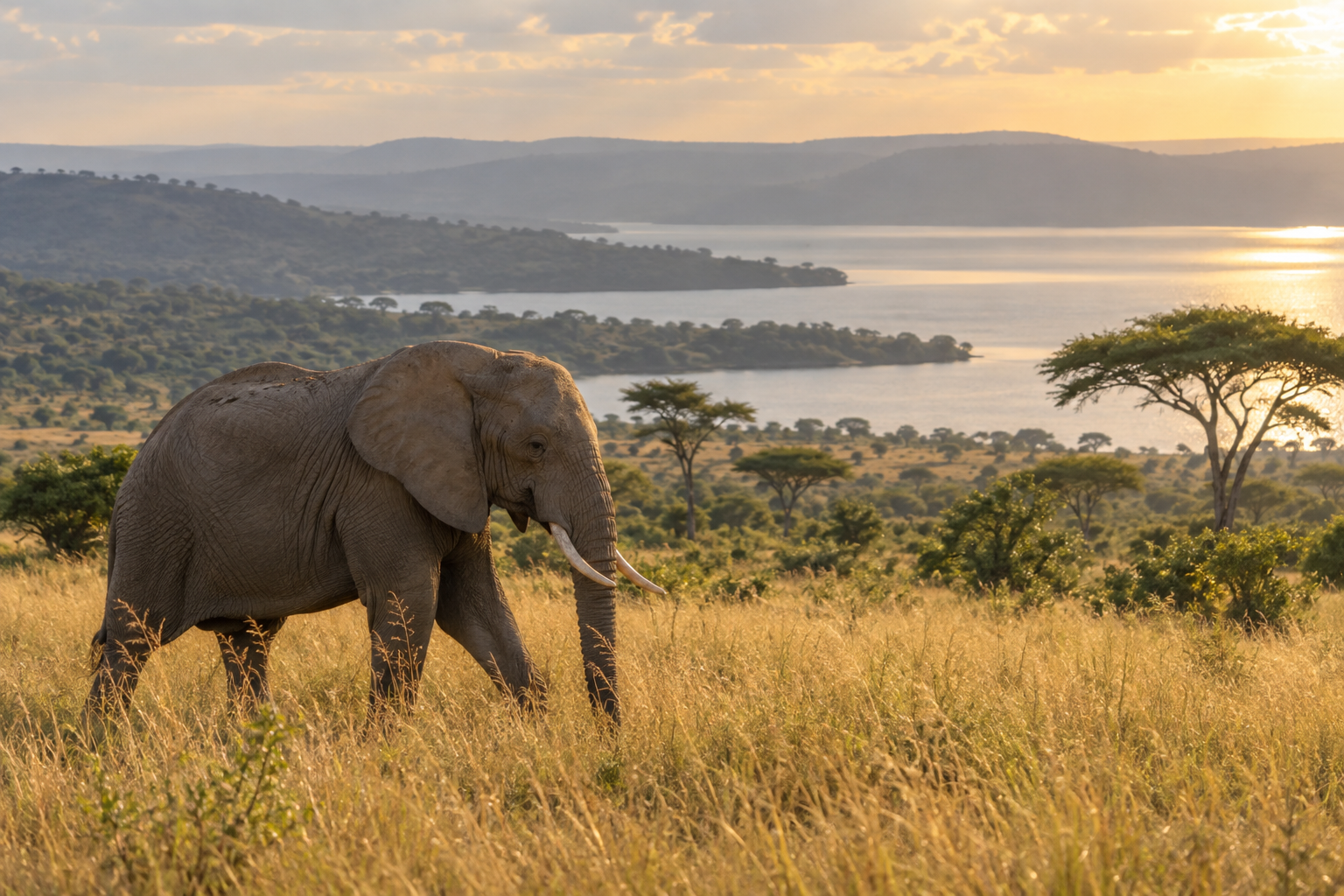
Akagera adds a Big Five savanna safari to a Rwanda gorilla itinerary.
Gorillas dominate Rwanda safari marketing, but the country has three other national parks and several worthwhile side trips:
Beyond gorillas: what else Rwanda offers
Stay connected on your East Africa safari
Skip airport SIM queues. Activate a Safari eSIM before you fly and get instant 4G/LTE data on arrival — perfect for sharing photos from the bush.
Get a East Africa eSIM
Frequently asked questions
Is the Rwanda gorilla permit worth $1,500?
If you value time and comfort — yes. The hike is often shorter (1–3 hours vs Uganda's 2–8 hours), trails are better maintained, and lodges are world-class. If budget matters more, Uganda's $800 permit gives the same one-hour experience with the gorillas.
How long is a typical Rwanda safari?
Three to five days is the most common, focused on gorillas. Add Akagera (Big Five) for 7–8 days, or combine with Tanzania/Kenya for a 10–14 day East Africa bucket-list trip.
Rangers assign gorilla families based on fitness level. If you flag limited mobility or fitness during the morning briefing, they'll place you with a family that ranges close to the park boundary — sometimes as little as 30–45 minutes of walking. Porters can be hired to carry your pack, offer a hand on steep sections, or even support your weight on the way back. For visitors with significant mobility issues, stretcher-style carriers can be arranged in advance for an additional fee.
What if I'm not fit enough to hike for hours?
The minimum age for gorilla trekking in Rwanda is 15 years. This is strictly enforced — rangers check passports at the briefing. The age limit exists because younger children are more likely to make sudden movements or noise that could startle the gorillas, and the trek itself can be physically demanding. Families with younger children can visit Akagera (no age limit) or explore Kigali while older family members trek.
Can children do gorilla trekking?
Rwanda requires proof of yellow fever vaccination only if you're arriving from a yellow fever endemic country. If flying direct from Europe, North America, or most Asian countries, it's not required. However, if you're combining Rwanda with Uganda, Kenya, or Tanzania, you may need it for onward travel even if Rwanda itself doesn't ask. Check requirements for your full itinerary, not just Rwanda.
Do I need a yellow fever certificate for Rwanda?
When should I book gorilla permits?
Six to twelve months ahead for peak season (Jun–Sep, Dec–Feb). Permits are limited to 96 per day and the best lodges allocate them with their bookings.
Is Rwanda safe to travel?
Yes — Rwanda is one of the safest countries in Africa, with low crime and excellent infrastructure. Kigali consistently ranks among the cleanest African capitals.
Can I combine Rwanda with Uganda?
Yes — Volcanoes NP (Rwanda) and Mgahinga (Uganda) share the Virunga range. Crossing the land border is straightforward; Safari.com can package both countries together.
Ready to book your Rwanda safari?
Plan with Safari.com
Safari.com is Africa's leading safari company (World Travel Awards 2024 & 2025). We earn a small affiliate commission on bookings — at no extra cost to you.