


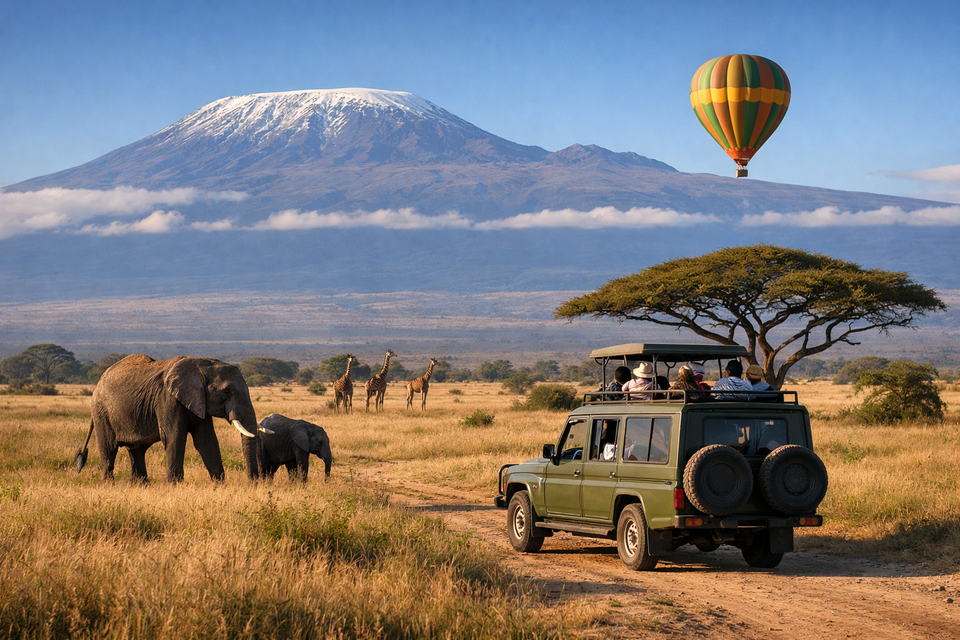

Three costs drive the total for a 7–10 day Tanzania safari: park entry and concession fees, accommodation level, and transport. A 7-day itinerary usually combines Tarangire, Ngorongoro Crater and two or three nights in the Serengeti. A 10-day version adds Lake Manyara or a Zanzibar beach ending.
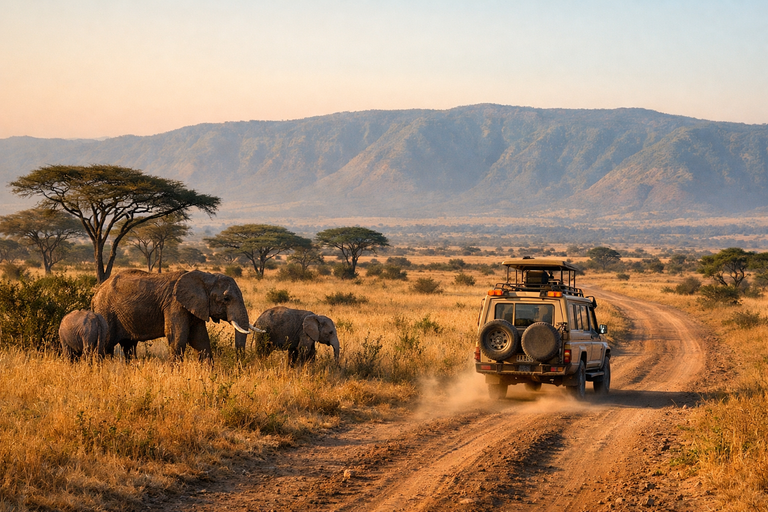
A 7–10 day northern Tanzania safari commonly links Tarangire, the Serengeti and Ngorongoro.
For a 7-day option, take in Tarangire on day one, the crater floor on day two, then three days in the Serengeti before the drive back to Arusha. A 10-day option slows that central section to three nights, adds Lake Manyara, and ends with an internal flight to Zanzibar for a short beach stay.
If the beach ending is part of your plan, see our Zanzibar eSIM guide.
Park fees: paid per person per 24-hour block; Ngorongoro adds a separate crater service fee.
Accommodation: the largest variable. Choices run from campsites to tented camps and lodges inside or near the parks.
Transport: a private 4x4 with driver-guide costs more per person than a shared seat-in-car.
Internal flights: optional Arusha–Serengeti or Arusha–Zanzibar transfers cut driving time but add a separate airfare line.
Need phone data for route confirmations and check-ins without relying on lodge Wi-Fi? Check safariesim.com’s Tanzania eSIM plan before you travel.
Is a 7-day or 10-day Tanzania safari right for you?
Pick a 7-day safari if you want the classic northern circuit without losing a day. A typical private safari uses one vehicle and one guide throughout, starting in Arusha. Two nights in central Serengeti, two nights in the Ngorongoro area, and one night near Tarangire or Lake Manyara deliver big cats, the crater floor and elephant herds without constant packing. Park fees are payable per person per day. The vehicle is charged per group, so a private safari becomes better value with two or more travellers.
Choose a 10-day option for slower game drives, a western Serengeti river crossing window, or a quieter end. Add an extra night there, two nights in Tarangire, and a night near Arusha on arrival. The total rises mainly through extra lodge nights and park fees, not higher daily 4x4 rates. That makes the 7-day safari the tighter budget. Before you set off, load a Tanzania eSIM from safariesim.com so you can check lodge directions and pick-up times on the road.
For a broader look at operator options, see our best Tanzania safari tours 2026.
A 7-day route starts in Arusha with one night for vehicle checks and fuel. Days two and three cover Tarangire for elephants and baobab woodland. Two Serengeti nights then give you time on the central plains. The last full day descends into Ngorongoro Crater for rhino, lion and hippo viewing before the return to Arusha.
A 10-day option adds an extra Serengeti night and a slower return through the Ngorongoro highlands. You get two crater rim mornings instead of one. Separate fixed park, crater service and guide-vehicle fees from variable lodging, group size and season. Crater-rim beds and camps on the plains usually come at a higher rate than a night in Arusha or Tarangire, so request an itemised itinerary and compare those line items first.
A private safari that follows this 10-day map can feel much more comfortable because the guide can hold a sighting instead of keeping one eye on the clock.
Option | Typical routing | Main cost pressure |
|---|---|---|
7 days | Crater service fee, compact game-drive schedule | |
10 days | Extra Serengeti nights, longer fuel time |
Set up a Tanzania eSIM before leaving Arusha. You’ll have gate times, road conditions and lodge directions on the move.
When a week is fixed, the 7-day option covers the same core parks quickly. The 10-day version suits travellers who want two distinct Serengeti areas and a less hurried return through the northern circuit. Add a night at Tarangire or Lake Manyara, then spend three nights across the central Seronera valley and the quieter reaches to the north or west instead of two. Staying inside or close to the park buys extra wildlife time, cuts daily transfers, and lets you work around the hot midday lull.
This slower pace is also more comfortable for travelers who want a second full day in the same national park without relocating.
Cost the extension line by line, not as a single figure. Park fees are generally charged per 24-hour day. Guide and vehicle hire are charged per day, and most camps per person sharing. A 10-day trip adds roughly two full-board nights, one or two extra park entry days, and two extra guide-and-vehicle days. Accommodation tier moves the total more than the extra nights: a mid-range 10-day trip costs more than a budget 10-day trip but still less than a luxury 7-day safari.
The slower route changes daily planning too. You can sit with a sighting in better light, return to water sources during quiet hours, and pause in Karatu on the drive back instead of rushing to Arusha. If you need data on arrival and between reserves, a Tanzania eSIM covers transit days without hunting for a local SIM.
How much does a 7–10 day Tanzania safari cost per person?
Safari pricing is quoted per person sharing. The total depends less on the number of days alone than on accommodation class, season, and whether you fly or drive between parks. The largest line items are usually park fees, accommodation, a private vehicle and guide. Internal flights add cost but save long drives. A compact 7-day route usually covers Tarangire, the Serengeti and Ngorongoro Crater, with two nights inside its boundaries. The same budget stretches less far in high season, when lodges and tented camps price for peak wildlife viewing.
For travelers, the biggest cost split is not park entry but how many nights you stay inside each national park. The best wildlife viewing often sits inside the Serengeti and Ngorongoro, where accommodation costs are highest.
A 10-day option adds slower drives and a third or fourth national park area, such as Lake Manyara or a longer Serengeti stay. More nights raise accommodation and park fees. You reduce the cost per wildlife-hour because you are not paying for a long transfer each day. That often makes the longer trip better value per day. Ask operators to itemise park entry, conservancy fees, guide and vehicle, meals, and any internal flight. Add a connectivity line: a safariesim.com Tanzania eSIM avoids airport SIM queues.
Detailed cost table: budget, mid-range and luxury safari estimates
A 7-day northern circuit usually covers Arusha, Tarangire, Serengeti and Ngorongoro. A 10-day version adds slower game drives, extra Serengeti nights and often Lake Manyara. Exact totals depend on season, number of travellers and accommodation class, so use the table as a service-level comparison rather than a fixed quote. The number of days changes the total more than the daily rate because park fees are charged per 24-hour block and longer trips add lodge nights.
Request a safari quote that breaks out each park fee and the private 4x4 rate so you can compare 7- and 10-day options.
Cost component | Budget | Mid-range | Luxury |
|---|---|---|---|
Accommodation | Mobile camping or basic lodges | Permanent tented camps and standard lodges | High-end camps and private lodges |
Vehicle and guide | Shared group 4x4 | Private 4x4 | Private 4x4 with specialist guide |
Internal transfers | Road only | Road, optional flight | Flights more common |
Meals and drinks | Basic, limited drinks | Most meals included | Full board, premium drinks |
Extras | Fewer add-ons | Some included activities | Balloon safari where available |
Two travellers sharing a vehicle normally pay less per person than a solo traveller. Groups of four to six reduce it further. Budget separately for connectivity: a Tanzania data eSIM is a small fixed cost compared with vehicle and lodge rates, and you can confirm current park and operator rates with a written quote.
Solo travelers should ask for a single supplement or join a shared departure.
What is included in the safari price—and what costs extra?
Most quoted prices cover core ground costs: park and concession fees, a 4x4 vehicle with driver-guide, fuel, accommodation, meals, and game drives. The same categories apply to a 7-day itinerary and a 10-day version. The longer trip adds more nights in lodges or tented camps and more park entry days, so the cost increases with those added nights rather than through a different pricing model. Always confirm whether park fees are charged per 24 hours or per calendar day.
Costs that are typically separate include international and internal flights, visas, travel insurance, drinks, laundry, tips, and optional activities such as walking safaris or Maasai village visits. Connectivity is another extra to plan for. Mobile data for maps and park communication is rarely bundled. A Tanzania eSIM is a practical way to stay connected without changing your physical SIM.
For specific budget, mid-range and luxury figures, refer to the cost table above. The main difference between those columns is usually the standard of lodge and whether transfers are by road or internal flight. Check inclusions and exclusions before comparing quotes.
Private safari or group tour: which offers better value?
A private safari changes the plan, not just the price. On a 7-day private itinerary through Tarangire, Serengeti and Ngorongoro, you pay for exclusive use of the vehicle and guide. You can stop at sightings, leave before dawn, or wait out a river crossing without negotiating with strangers. The same route in a group costs less per person, but the pace and meal stops are shared.
On a 10-day plan, extra nights in the Serengeti or a stop between Ngorongoro and Arusha give a private safari more room to justify its premium. Use the detailed cost table above. Expect a private option to sit roughly one bracket higher than the equivalent group rate, because the main extra cost is the private 4x4, guide and flexibility, not park fees. For a 7-day private trip, spend the premium on the guide and vehicle rather than upgrading every lodge. Over 10 days, the added cost feels more worthwhile because you are paying for freedom every day. Sort connectivity before you leave; a Tanzania eSIM helps you confirm camp changes without hunting for Wi-Fi.
How do season and travel dates affect costs and wildlife viewing?
Season is the biggest price and wildlife lever on a 7–10 day northern circuit. In the long rains (roughly March to May), many camps lower rates or suspend operations. A 10-day itinerary can become more affordable but harder to run; long grass and muddy roads reduce sightings and slow transfers. The dry months from late June to October bring the most reliable game concentrations around water sources. Lodges, vehicle hire and private guide fees sit at peak rack rates, and prime camps book out early.
This seasonal swing matters because wildlife movements change the value of each day in the bush. For dry-season date planning, see our Tanzania June 2026 safari guide.
For a seven days route through Arusha, Tarangire, Serengeti and Ngorongoro, dry-season dates mean fewer nights at the highest rates. A 10-day itinerary in the short rains or green season can include extra nights at lower rack rates and more flexibility with your guide. Build in a buffer for afternoon downpours and check which camps stay open. Use the cost table earlier in this guide to position your preferred lodge tier, then shift it upward for peak dry-season dates or downward for April and May. For either length, safariesim.com’s Tanzania eSIM helps you stay online for weather updates and lodge confirmations.
For a 7-day safari, the most common route is Arusha–Tarangire–Ngorongoro–central Serengeti, then a long return by road to Arusha or a flight from Seronera. This keeps the park-to-park drives manageable. The final day can still be a full day of rough road rather than a morning game drive. A 10-day itinerary usually adds one or two nights in Ndutu or the northern Serengeti. That spreads the same loop over more game drives and shorter repositioning days; the extra nights are the main cost difference, not the driving distance itself.
When a domestic flight replaces a road transfer—typically Arusha or Manyara to Seronera, or Kogatende back to Arusha—the airfare is an additional line item on top of the vehicle and guide you have already booked. Budget for it separately, because it can remove a full-day bumpy transfer and buy you an extra half-day on safari. Before you set off, having a Tanzania eSIM already installed helps you re-check flight timings and stay in contact with your guide if rain or road conditions change the route.
Accommodation, packing, connectivity and practical preparation
Lodging on the route ranges from simple mobile camps to permanent tented camps and lodges with hot water and charging points. Match accommodation to your itinerary, not just your budget. A seven-day loop works well with one night in Tarangire, two or three in the Serengeti and one on the crater rim. A ten-day version is more comfortable when you add a second camp or Lake Manyara and avoid back-to-back transfers. Use the detailed cost table earlier in this article to compare seven- and ten-day estimates across budget, mid-range and luxury options. The ten-day trip costs more mainly because of an extra gate-entry day, a guide and 4x4 hire, and additional accommodation nights.
The same safari works as a 10-day route if you add a second Serengeti camp.
Pack for cool mornings and dusty game drives: a warm fleece, long-sleeved shirts, a wide-brim hat, closed shoes, sunscreen, insect repellent, binoculars and a camera with spare batteries. Many camps inside the parks have limited or unreliable Wi-Fi, so sort connectivity before you leave. A Tanzania eSIM is useful for staying in touch between lodges and checking updates, though you should still expect signal dead zones inside the Serengeti and Ngorongoro Crater. Download offline maps and park guides in advance. Carry small-denomination cash for tips and park-area purchases.
Compare current data plans in our Tanzania eSIM guide 2026 plans costs coverage.
Most first-time visitors find a 7-day itinerary enough for Tarangire, the central Serengeti and the Ngorongoro Crater. Budget roughly USD 2,800–3,800 per person for a mid-range tented camp and private 4x4, excluding international flights. A 10-day option adds a second Serengeti region and Lake Manyara, raising the total by USD 900–1,600 per person.
A private Tanzania safari gives you control over game-drive departures and photo stops. Longer trips offer better per-night value, but extra days mainly buy wildlife time rather than park variety. To stay connected between camps, check your phone’s Tanzania eSIM options before you leave Arusha.
Use this quick checklist to keep a 7-day private or 10-day private Tanzania safari comfortable and on budget. Split the quote into park fees, lodging, and the private 4x4. Build each day around one main game drive inside a national park; two shorter drives work better in Tarangire or the Serengeti when travelers are tired from a transfer. Travelers should confirm whether the vehicle and guide are exclusive for the whole route, because that detail changes the price more than the number of days. For a private safari, the vehicle should be booked for your group only.
For a 10-day private Tanzania safari, add one extra comfortable night in the Serengeti or on the crater rim instead of rushing back to Arusha. Most travelers find a private Tanzania safari worth the premium when each game drive runs at your pace. A national park such as Tarangire rewards a slower stop-and-wait rhythm, and each park’s wildlife rhythm affects how early you start.
Is 7 days enough?
Yes, if you fly or drive straight from Arusha. You get two to three full days in the Serengeti and one on the crater floor.
What does 10 days add?
It adds a slower northern Tanzania pace, a second Serengeti area and usually one extra park. Expect roughly 30–45% higher costs.
Should I book a private vehicle?
For photographers or families, yes. You control stops and departures; expect USD 250–400 extra per day.
