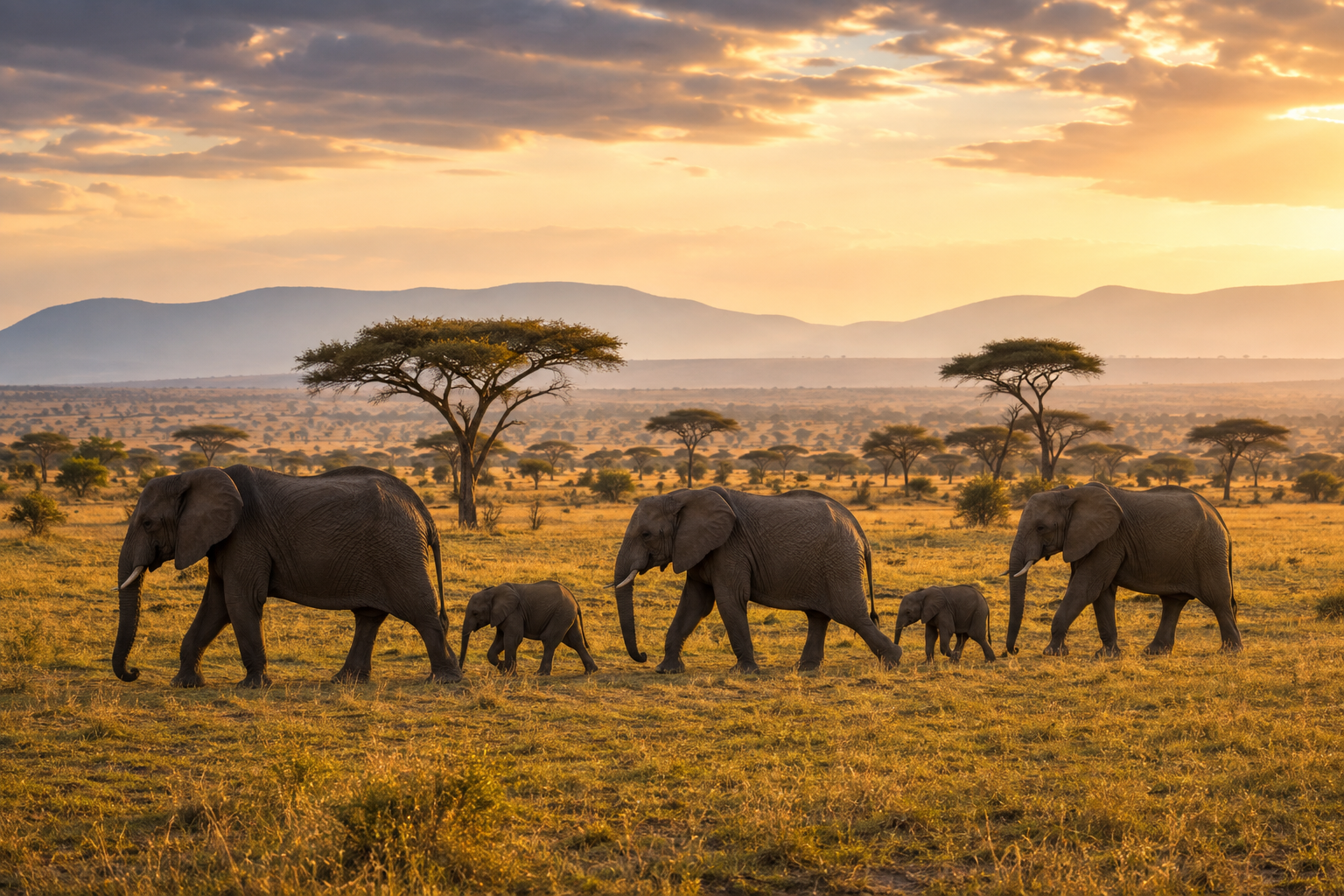
East Africa at a Glance: Countries, Capitals, and Regional Boundaries
East Africa means different things depending on context. The United Nations geoscheme defines eastern Africa broadly—18 territories from Sudan in the north to Mozambique in the south. The East African Community, a political and economic union, has seven member states: Kenya, Tanzania, Uganda, Rwanda, Burundi, South Sudan, and the Democratic Republic of the Congo. This regional union facilitates trade, movement, and cooperation among member states. Tourism typically focuses on Kenya, Tanzania, Uganda, and Rwanda—the four countries forming the main safari circuit. Each member republic contributes unique attractions, from Kenya's Masai Mara to the mountain gorillas found in Uganda and Rwanda.
Country | Capital | Largest City | Main Safari Draw |
|---|---|---|---|
Kenya | Nairobi | Nairobi | Masai Mara, Great Migration, coastal reserves |
Tanzania | Dodoma | Dar es Salaam | Serengeti, Ngorongoro Crater, Zanzibar |
Uganda | Kampala | Kampala | Mountain gorillas, Bwindi, Queen Elizabeth National Park |
Rwanda | Kigali | Kigali | Mountain gorillas, Volcanoes National Park, genocide memorial sites |
Ethiopia | Addis Ababa | Addis Ababa | Simien Mountains, Danakil Depression, historical sites |
Burundi | Gitega | Bujumbura | Lake Tanganyika, Rusizi National Park |
South Sudan | Juba | Juba | Boma National Park (limited tourism infrastructure) |
East Africa occupies the eastern side of the continent, forming a crucial part of Africa's geography and biodiversity. The Indian Ocean forms its eastern border, the Sahel and north Africa lie to the north, central Africa to the west, and southern Africa below Tanzania and Mozambique. The Great Rift Valley runs through the region from Ethiopia through Kenya and Tanzania, creating dramatic escarpments, volcanic peaks, and a chain of lakes including Lake Victoria—the largest lake in Africa and second-largest freshwater lake in the world.
Why Tourists Visit East Africa: Safaris, the Great Migration, National Parks, Lakes, and Indian Ocean Beaches
East Africa offers wildlife encounters unavailable anywhere else, making this region one of the world's premier safari destinations. The Serengeti-Mara ecosystem hosts the Great Migration, an annual cycle in which roughly 1.5 million wildebeest, 200,000 zebras, and thousands of gazelles move in a loop between Tanzania's Serengeti National Park and Kenya's Masai Mara. The herds follow seasonal rains and fresh grass, crossing crocodile-filled rivers in dramatic scenes filmed for nature documentaries worldwide and featured in international news coverage. Peak river crossings occur in July and August.
Mountain gorillas live only in the Virunga Mountains shared by Uganda, Rwanda, and the DRC, making human-gorilla encounters in this region truly unique. Bwindi Impenetrable National Park in Uganda and Volcanoes National Park in Rwanda offer gorilla trekking permits, allowing small groups to spend one hour with a habituated gorilla family. Permits cost several hundred dollars per person. This premium experience supports conservation efforts and local communities while ensuring the protection of these endangered primates.
National parks across the region protect distinct ecosystems that showcase Africa east to west biodiversity. Tanzania's Ngorongoro Crater is a collapsed volcanic caldera hosting concentrated populations of lions, elephants, rhinos, and flamingos. Kenya's Amboseli National Park sits below Mount Kilimanjaro, offering views of elephants against Africa's highest peak. Uganda's Queen Elizabeth National Park features tree-climbing lions and boat safaris along the Kazinga Channel. Rwanda, recovering from the 1994 genocide, now ranks among Africa's safest and cleanest countries, with Kigali serving as a regional hub and a model city making international news for its cleanliness and development.
The Indian Ocean coastline adds beach extensions to safari itineraries, giving travelers a chance to relax after days of game drives. Zanzibar, an archipelago off Tanzania, combines historic Stone Town—a UNESCO World Heritage site—with white-sand beaches and diving sites. Kenya's coast includes Diani Beach, Watamu, and Lamu Island. Mozambique's northern coastline attracts visitors from East African safari circuits seeking less-developed beach destinations.
Cultural experiences include visits to Maasai villages in Kenya and Tanzania, coffee plantation tours in Ethiopia's highlands, and memorial sites related to the Rwanda genocide. Ethiopia's ancient history adds another dimension, with rock-hewn churches in Lalibela and the supposed resting place of the Ark of the Covenant in Axum drawing pilgrims and history enthusiasts. These cultural encounters offer insight into the region's rich human heritage and diverse traditions.
Multi-Country Safari Routes Through Kenya, Tanzania, Uganda, Rwanda, and Ethiopia
Classic itineraries combine two or three countries to maximize wildlife variety and habitat types across this diverse region. A Kenya-Tanzania loop typically starts in Nairobi, moves to Masai Mara for three to four nights, crosses into Tanzania for Serengeti and Ngorongoro Crater, then ends in Arusha or extends to Zanzibar. This route works year-round but peaks during the Great Migration river crossings.
Uganda-Rwanda gorilla circuits pair gorilla trekking in both countries with chimpanzee tracking in Uganda's Kibale Forest. The route often includes Queen Elizabeth National Park for general game viewing before moving to Bwindi or Mgahinga for gorillas, then crosses into Rwanda for Volcanoes National Park and a Kigali city tour. Total trip length runs 10 to 14 days. This itinerary showcases the union of conservation efforts across both republics.
A longer East African grand tour might combine Kenya's Masai Mara, Tanzania's northern circuit, Uganda's primates, and Rwanda's gorillas over three to four weeks. Some travelers add Ethiopia's Simien Mountains or Omo Valley cultures at the start or end, though Ethiopia requires separate planning due to distance and distinct landscapes. These comprehensive tours reveal why this region remains a cornerstone of global safari tourism.
Southern Tanzania receives fewer visitors but offers wilderness experiences in Ruaha, Selous (now Nyerere National Park), and Katavi. These parks require flying between camps and suit travelers seeking remoteness over accessibility. Combining southern Tanzania with northern parks creates a comprehensive Tanzania-only itinerary.
Border crossings between Kenya and Tanzania operate at Namanga (Nairobi-Arusha road), Isebania (western route), and Lunga Lunga (coastal crossing). The Kenya-Uganda crossing at Busia or Malaba serves overland travelers. Rwanda borders Uganda at Katuna and Cyanika, both used for gorilla circuit itineraries. Most crossings allow visa-on-arrival for many nationalities, though checking current requirements before travel prevents delays.
East Africa Travel Essentials: Local Time, Border Crossings, Seasons, Safety, and Responsible Tourism
Kenya, Tanzania, Uganda, and Rwanda operate on East Africa Time, which is UTC+3 with no daylight saving changes. Ethiopia uses the same offset but follows a unique 12-hour clock starting at dawn rather than midnight, which can confuse visitors trying to book transportation or accommodations. Confirm whether times are quoted in Ethiopian or international format to avoid missed connections.
The East African Community issues a single tourist visa allowing entry to Kenya, Uganda, and Rwanda for $100, valid 90 days. This union-wide visa simplifies travel across member states. Tanzania requires a separate visa, typically $50 for most nationalities. Processing happens at airports or land borders, though online e-visa applications reduce arrival wait times. Passport validity must extend at least six months beyond arrival dates.
Visa | Countries covered | Cost | Validity |
|---|---|---|---|
East African Community tourist visa | Kenya, Uganda, and Rwanda | $100 | 90 days |
The East African Community tourist visa covers Kenya, Uganda, and Rwanda for 90 days.
East Africa has two main seasons that determine the best times to visit this part of the continent. Long rains fall from March through May, turning dirt roads muddy and making some parks difficult to access. Short rains arrive in November, lasting a few weeks. Dry seasons from June through October and December through February offer the best game viewing as animals concentrate around water sources. The Great Migration river crossings peak in July and August, making those months the busiest and most expensive, often featured in travel news and social media.
Safety varies by country and region within East Africa. Rwanda and Uganda maintain low crime rates in tourist areas. Kenya's cities require standard urban precautions—avoiding unlocked car doors, carrying minimal valuables, and using registered taxis. Tanzania's parks are safe, but Dar es Salaam demands vigilance against petty theft. Parts of northern Kenya near the Somali border and eastern areas of the DRC face security concerns. Check government travel advisories and monitor regional news before visiting remote regions.
Responsible tourism practices protect the ecosystems and communities that make East Africa valuable, ensuring that future generations can experience this region's wonders. Keep distance from wildlife. Never feed animals. Follow guide instructions during gorilla treks. Choose lodges and operators that employ local staff and support community projects. Purchase handicrafts directly from artisan cooperatives rather than airport shops. Avoid single-use plastics—Rwanda banned plastic bags entirely. These practices help preserve both the natural environment and human communities that depend on sustainable tourism.
East Africa Mobile Coverage by Country: Networks, National Parks, Cities, and Remote Safari Areas
Mobile network quality differs dramatically between urban centers and wilderness areas across the region. Kenya's main carriers, Safaricom and Airtel Kenya, provide 4G coverage across Nairobi, Mombasa, and major towns. Safaricom reaches many national parks including parts of Masai Mara, Amboseli, and Tsavo, though signal drops in remote conservancies. Airtel offers slightly weaker national park coverage but remains functional in cities.
Tanzania's networks include Vodacom Tanzania, Airtel Tanzania, Tigo, and Halotel. Vodacom delivers the strongest coverage in northern circuit parks around Arusha, including parts of Serengeti and Ngorongoro. Southern parks like Ruaha and Nyerere have minimal or no coverage. Dar es Salaam and Zanzibar maintain reliable urban connectivity. The United Republic of Tanzania has invested in expanding mobile infrastructure, but vast wilderness areas remain without signal.
Uganda's MTN Uganda and Airtel Uganda cover Kampala thoroughly and extend to major highways, but Bwindi Impenetrable Forest and other remote parks have patchy or absent signal. Some gorilla trekking lodges offer Wi-Fi, but connectivity during actual treks disappears entirely. Queen Elizabeth National Park has intermittent coverage near main roads.
Rwanda's MTN Rwanda offers surprisingly good coverage given the country's small size and mountainous terrain, reflecting the republic's commitment to digital infrastructure. Kigali has consistent 4G, and Volcanoes National Park receives signal at park headquarters and some lodges, though deep forest areas lose connection. Rwanda's national fiber-optic network supports better rural coverage than neighboring countries.
Ethiopia's Ethio Telecom holds a monopoly with expanding 4G in Addis Ababa and regional capitals, but rural areas often drop to 2G or no service. The Simien Mountains and Danakil Depression lack coverage entirely. Recent political instability in some regions has led to periodic internet shutdowns that make international news.
Somalia and South Sudan have limited networks with security concerns restricting tourist travel, making mobile coverage largely irrelevant for typical safari itineraries. Mozambique's northern regions have coverage through Vodacom Mozambique and Movitel near coastal towns but not in remote reserves.
Why Multi-Country Travelers Benefit from a Broader SafarieSIM Africa Safari eSIM
Crossing borders repeatedly creates connectivity gaps when using single-country SIM cards, a common frustration for travelers exploring multiple countries in the region. A SafarieSIM Africa Safari eSIM works across multiple countries without requiring physical SIM swaps at each border. The eSIM activates digitally before departure and switches networks automatically as you move between Kenya, Tanzania, Uganda, Rwanda, and other covered territories.
Regional eSIMs eliminate the need to purchase new SIM cards in each capital, register with local telecom providers, or navigate language barriers at mobile shops. Instead of losing half a day in Arusha buying a Tanzanian SIM after arriving from Nairobi, travelers activate the eSIM once and maintain data throughout the trip. This matters most when traveling through multiple national parks where reaching a telecom shop becomes impractical.
Data sharing across countries prevents waste. Single-country SIM cards leave unused data behind when crossing borders, forcing repurchase of new plans. Regional eSIMs pool data that works anywhere within the coverage area, letting travelers use the full allocation whether they spend more time in Kenya or Uganda shifts mid-trip.
Some lodges and camps in national parks charge high rates for satellite Wi-Fi or offer no connectivity at all. Having a working data connection means contacting safari operators about itinerary changes, sharing wildlife photos while memories are fresh, and accessing maps or translation apps in towns between parks. For multi-country itineraries covering two or three weeks, uninterrupted connectivity justifies the cost.
SafarieSIM vs Airalo Comparison: Coverage, Price, Plan Value, and Activation
Feature | SafarieSIM Africa Safari | Airalo |
|---|---|---|
Countries Covered | 36 African countries including Kenya, Tanzania, Uganda, Rwanda | Varies by plan; regional Africa plans available |
Network Partners | Connects to primary carriers in each country | Varies; may use secondary networks in some regions |
Data Rollover | Check current policy on SafarieSIM site | No rollover; unused data expires with plan |
Activation | Install before departure; activates on first connection | Install and activate through Airalo app |
Top-Up Options | Available through account dashboard | Available in-app with immediate activation |
Customer Support | Safari-focused support team | General travel eSIM support |
Both providers support eSIM-compatible devices and work across East African countries. SafarieSIM focuses specifically on safari travelers with coverage optimized for wildlife destinations. Airalo serves global travelers with a broader range of country-specific and regional plans. Pricing varies based on data amount and validity period. Compare current rates on each platform before purchase to get the best value for your itinerary length and data needs.
Affordable African eSIM Options Explained: Cheapest Plans, Broader Coverage, and Alternative Providers
Beyond SafarieSIM and Airalo, several providers compete in the African eSIM market, offering travelers more choices for staying connected across the region. Roamless offers African regional plans with flexible data amounts and simple per-gigabyte pricing. Jetpac Africa targets safari travelers similarly to SafarieSIM, with network partnerships across East and southern Africa. Nomad Africa provides both single-country and regional options with longer validity periods for extended trips.
The cheapest plans typically offer 1GB to 3GB of data for short trips, costing between $5 and $15 depending on the provider and validity period. These work for travelers who primarily use lodge Wi-Fi and only need mobile data for occasional map checks and messaging. Mid-range plans with 5GB to 10GB suit most two-week safari itineraries with regular social media use and photo uploads. Heavy users streaming video or conducting video calls should consider 20GB or unlimited plans where available.
Broader coverage costs more upfront but reduces hassle on multi-country trips spanning this diverse region. A 36-country African eSIM costs more than individual SIM cards in Kenya and Tanzania, but saves time and prevents the common problem of arriving at a border late in the day when mobile shops have closed. For itineraries covering three or more countries, regional eSIMs almost always prove more economical when accounting for time saved.
Some travelers prefer purchasing local SIM cards despite the inconvenience because they offer better per-gigabyte value for long stays in one country. A Safaricom SIM in Kenya provides more data at lower cost than any eSIM for trips spending multiple weeks in Kenya alone. However, installing an eSIM in Africa takes minutes versus the hour or more often required to register a physical SIM card at a telecom shop.
How to Activate an eSIM and Check Compatibility in Settings
Before purchasing any eSIM, verify your device supports the technology to avoid disappointment. On iPhone, open Settings, tap General, select About, and look for a Digital SIM or IMEI section showing multiple IMEI numbers. Two IMEI numbers means your phone supports eSIM. Check for "No SIM Restrictions" or "No Carrier Lock" in the same menu—locked phones may not support eSIM or may restrict which providers work.
For Android devices, the process varies by manufacturer. Samsung users go to Settings > Connections > SIM card manager to see if eSIM appears as an option. Google Pixel phones show eSIM capability in Settings > Network & internet > SIMs. If eSIM options appear, the device supports digital SIMs. Most flagship phones released after 2020 include eSIM capability, but budget models and phones sold in some markets lack the feature.
Activation requires an internet connection, so complete the process while still on home Wi-Fi or before leaving for the airport. Purchase the eSIM plan through the provider's website or app, then receive a QR code via email. Scan the QR code through your phone's Add Cellular Plan function (iPhone) or SIM card manager (Android). The eSIM profile installs immediately but typically does not activate until you connect to a network in the destination country.
After installation, enable data roaming for the eSIM line in your cellular settings. Keep your home SIM active if you need to receive calls or texts on your original number, but disable data roaming on the home line to prevent unexpected charges. The eSIM handles all data traffic while your home SIM only processes calls and messages if you choose to keep it active.
Some travelers encounter activation issues because they forget to enable data roaming or fail to restart their phone after installing the eSIM. A simple reboot solves most problems. If the eSIM does not connect after landing and restarting, manually select a network in Settings > Cellular > Network Selection rather than leaving it on automatic. This forces the phone to scan for available carriers and often resolves connection failures.
FAQ
What are the countries in East Africa?
The East African Community includes seven member states in its political and economic union: Kenya, Tanzania, Uganda, Rwanda, Burundi, South Sudan, and the Democratic Republic of the Congo. For safari tourism purposes, East Africa typically refers to Kenya, Tanzania, Uganda, and Rwanda. The broader United Nations definition of eastern Africa includes 18 countries stretching from Sudan in the north to Mozambique in the south, adding Ethiopia, Somalia, Djibouti, Eritrea, and others. Each republic within this region contributes to the diverse character of Africa east.
Why do tourists come to East Africa?
Tourists visit East Africa primarily for wildlife safaris in parks like Serengeti, Masai Mara, and Bwindi, drawn by some of the world's most spectacular wildlife viewing. The Great Migration draws visitors in July and August for river crossing spectacles often featured in nature documentaries and travel news. Mountain gorilla trekking in Uganda and Rwanda offers rare encounters with endangered primates and the chance to observe human-like behavior in these great apes. The region also attracts visitors for Indian Ocean beaches in Zanzibar and the Kenyan coast, as well as cultural experiences in Maasai villages and Rwanda genocide memorial sites that tell important human stories.
What are the top 3 richest countries in East Africa?
By total GDP, Kenya ranks first with the largest economy in East Africa, followed by Tanzania and Ethiopia. By GDP per capita, which measures wealth per person rather than total economic output, rankings shift with some smaller countries showing higher per-person income. Rwanda has experienced strong economic growth and reduced poverty since 2000, often making international news for its development progress, though absolute wealth levels remain below Kenya. Rankings fluctuate based on commodity prices, tourism revenue, and currency values. Each republic in the region follows different development paths based on their resources and governance.
What are the 7 countries in East Africa and their capitals?
The seven East African Community member states and their capitals are: Kenya (Nairobi), Tanzania (Dodoma, though Dar es Salaam serves as the commercial center), Uganda (Kampala), Rwanda (Kigali), Burundi (Gitega, with Bujumbura as the largest city), South Sudan (Juba), and the Democratic Republic of the Congo (Kinshasa). Ethiopia's capital is Addis Ababa when included in broader East African definitions. This union of nations works together on regional integration and development initiatives.
What time zone does East Africa use?
Most East African countries use East Africa Time, which is UTC+3 with no daylight saving changes. This includes Kenya, Tanzania, Uganda, Rwanda, Ethiopia, and Somalia. The time stays consistent year-round, making it three hours ahead of Coordinated Universal Time. Ethiopia uses the same UTC+3 offset but traditionally counts hours starting at dawn rather than midnight, which can create confusion when booking transportation or accommodations.
Does SafarieSIM work in South Africa?
SafarieSIM's Africa Safari eSIM covers 36 African countries across the continent, which includes South Africa. Travelers spending most of their time in South Africa specifically may find better value in dedicated South Africa eSIM plans. For itineraries combining East African safaris with South African extensions—such as Cape Town or Kruger National Park—the regional plan provides connectivity without switching SIMs. Check South Africa transport options when planning multi-region trips.
Do I need vaccines for East African safaris?
Yellow fever vaccination is required for entry to Kenya, Uganda, and Rwanda if arriving from countries with yellow fever transmission. Tanzania requires proof of vaccination if arriving from endemic areas. Many travelers also get hepatitis A and B, typhoid, and routine boosters. Malaria prophylaxis is recommended for most safari areas below 2,500 meters elevation. Consult a travel medicine clinic at least six weeks before departure since some vaccines require multiple doses over several weeks. For South African itineraries, review South Africa travel health and vaccine requirements.
Can I watch Africa Cup of Nations games while traveling in East Africa?
The Africa Cup of Nations tournament occurs every two years, drawing massive viewership across the continent and generating significant sports news coverage. Most hotels, lodges, and restaurants in East African cities show Africa Cup of Nations games on large screens, creating festive viewing atmospheres that showcase African football culture. Mobile data from a regional eSIM allows streaming Africa Cup of Nations standings and highlights between safari game drives. The tournament typically runs in January or February, falling during East Africa's dry season and peak safari period.
Exploring East African Culture and Heritage
Beyond wildlife, East Africa offers rich cultural experiences that reveal the human history and traditions of the region. The Swahili coast blends African, Arab, Persian, and European influences in architecture, cuisine, and language. Historic Stone Town in Zanzibar preserves centuries of trade and cultural exchange. The region's museums and cultural centers document both ancient civilizations and modern history, from early human ancestors discovered in Olduvai Gorge to the colonial period and independence movements.
Music and art form an integral part of East African culture. Each country in the union contributes distinct musical styles, from Kenya's benga and Uganda's kadongo kongo to Tanzania's bongo flava. Contemporary artists from the region gain international recognition, while traditional dance and crafts remain central to community celebrations. Visitors attending cultural festivals or village visits gain appreciation for the diversity of human expression across East Africa.
For travelers seeking deeper engagement, several external resources provide valuable context. The East African Community official website explains regional integration efforts and current union initiatives. UNESCO's World Heritage sites in Africa details protected cultural and natural sites across the region, helping visitors understand the global significance of East African heritage. These resources complement on-the-ground experiences and provide background that enriches travel through this remarkable part of the world.