



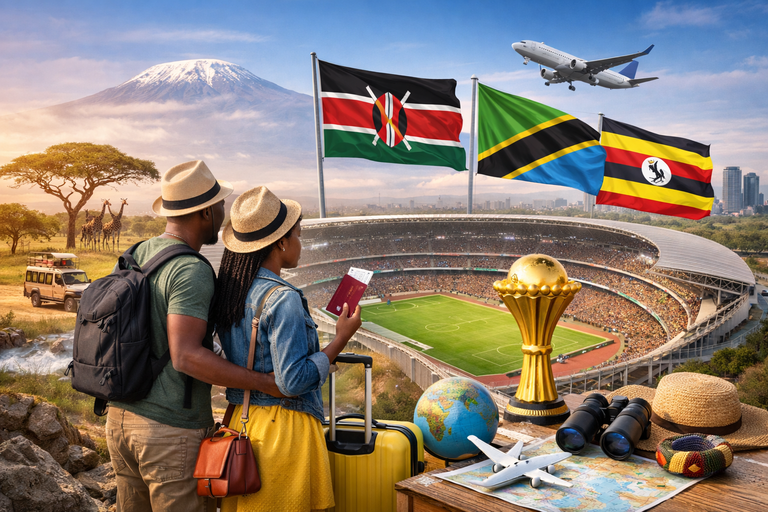
This AFCON 2027 travel guide covers confirmed dates when published, stadiums, host cities, tickets, entry requirements, transportation, accommodation and match-day planning. The tournament is scheduled for June 19 through July 18, 2027, with Kenya, Uganda and Tanzania sharing hosting duties. July 17 is not the final; it falls one day before the scheduled championship match.
Matches are expected across major urban centers. Nairobi, Kampala and Dar es Salaam should be the principal gateways, while additional host cities and stadium assignments remain subject to final confirmation. Let the complete match calendar determine where you stay and whether you need to cross borders. Build your itinerary around confirmed fixtures rather than assuming a team will remain in one country.
Tickets, entry documents and accommodation
Begin monitoring ticket announcements, entry requirements and passport validity well before sales open. To avoid relying on unofficial sellers or unconfirmed schedules:
Before booking nonrefundable flights, verify the published fixture, venue and kickoff time.
Purchase admission only through authorized tournament channels.
Check visa rules for each destination. Eligibility, required documents and permitted stays depend on nationality, and a multi-stop trip may require separate visa or electronic entry authorization applications for the three co-organizers.
Once the draw and venue schedule are released, reserve refundable accommodation near game-day areas and practical transport routes rather than simply choosing the closest property to a stadium.
Cross-border transport, timing and connectivity
Compare regional flights, coaches and border-crossing times after the match schedule is available. Allow extra time for stadium security, city traffic, congestion, border formalities and match-day transport changes. Together, these can make a short transfer impractical.
Travelers combining matches with sightseeing can use these Kenya budget travel tips to control everyday costs.
For mobile access, compare an eSIM for Africa with separate eSIM Kenya, eSIM Uganda and eSIM Tanzania plans. Check coverage, activation requirements, data allowances and hotspot rules before departure, and confirm that any regional service continues across all three host countries.
When and Where Will AFCON 2027 Take Place?
AFCON 2027 is scheduled for June and July 2027, although the exact opening and final dates remain subject to official confirmation. Kenya, Uganda, and Tanzania will jointly host the tournament—the first AFCON staged across three countries. Expected host cities include Nairobi, Kampala, Dar es Salaam, Zanzibar City, Hoima, and Arusha. Proposed stadiums include Kasarani Stadium, Nyayo National Stadium, and Talanta Sports City in Nairobi; Namboole Stadium in Kampala; Benjamin Mkapa Stadium in Dar es Salaam; and Amaan Stadium in Zanzibar. Travelers should verify the final venue list before booking domestic connections.
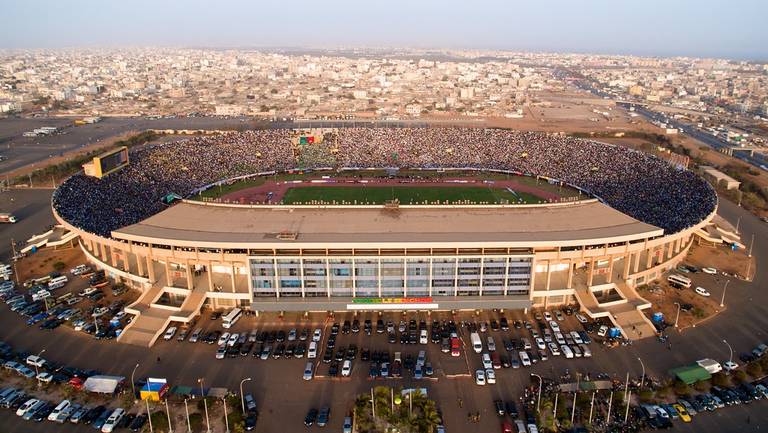
A modern stadium setting for international football — Photo: Jeff Attaway / Openverse (CC BY)
Tickets are expected to be released in phases after the match schedule and city allocations are confirmed. Buy only through official tournament channels. If your itinerary crosses borders, check each country’s visa rules separately and confirm whether you need multiple-entry permission. Reserve accommodation near your stadium or a reliable transport corridor, as match-night traffic can make cross-city travel slow. Flights are generally the most practical option between host countries, while buses may suit travelers with more time. Budget separately for local transport, meals and accommodation.
For connectivity, compare a regional eSIM for Africa with individual eSIM Kenya, eSIM Uganda, and eSIM Tanzania plans, checking coverage and validity before departure.
Kenya, Uganda and Tanzania are confirmed as joint hosts, but travelers should not treat every stadium named in bid documents or construction plans as a final match venue. CAF must approve the completed facilities and publish match assignments before specific cities, tickets or accommodation can be booked with confidence.
Country | Planning hub | Stadiums and status |
|---|---|---|
Kenya | Nairobi | Kasarani and Nyayo are established candidates; Talanta Sports City is a proposed tournament venue. |
Uganda | Kampala | Mandela National Stadium and Nakivubo are among the venues to monitor; other proposed sites require final confirmation. |
Tanzania | Dar es Salaam | Benjamin Mkapa Stadium is the principal established candidate, with additional proposed venues in other cities. |
Wait for the official fixture and ticket portals before paying for match-specific travel. Reserve refundable rooms near major transport corridors rather than beside an unconfirmed stadium. Cross-border supporters should check entry rules for all three countries and allow time for land-border delays. For connectivity, compare a regional Africa eSIM with separate plans for Kenya, Uganda and Tanzania, including their coverage, validity and data allowances.
How Can International Fans Buy Official AFCON 2027 Tickets?
Buy tickets only through the tournament’s official ticketing portal or sales partners named by the organizers. The portal should explain match categories, purchasing limits, accepted payment methods, delivery format and any transfer or resale rules. Ignore social posts promising a June release—or any other sales date—until the announcement appears on an official tournament channel.
Create your ticketing account before sales begin, using the same name shown on your passport. Prepare the details required for every attendee, confirm that your card permits international online transactions and keep the payment confirmation. Demand will likely be strongest for host-nation fixtures, knockout rounds and the final, so plan several acceptable matches rather than relying on one choice.
Before paying, check whether the ticket is issued to a named spectator, whether identity checks apply at the stadium and whether changes can be made later. Do not buy screenshots, copied QR codes or speculative “reservations” from unverified sellers. A match ticket does not replace a visa, passport or stadium-entry requirement.
Keep ticket costs separate from flights and accommodation, which may be harder to change. If you are combining matches with sightseeing, set daily limits for meals and activities without compromising reliable transportation or secure lodging.
Which Visas and Entry Documents Will You Need for East Africa?
There is no single tournament-wide visa announced for AFCON 2027, so your paperwork depends on which host country you enter first. Kenya requires an Electronic Travel Authorization (eTA) for most passport holders rather than a traditional visa on arrival. Uganda uses an e-visa system, while Tanzania offers both an e-visa and visa on arrival at main airports and land borders. If your Africa Cup of Nations route only touches Kenya and Uganda, the East Africa Tourist Visa can cover both countries, but it does not include Tanzania.
Make sure your passport is valid for at least six months beyond your planned departure from East Africa and has at least two blank pages. Carry a yellow fever vaccination certificate if you are arriving from a country where yellow fever is present; immigration officers may request it even during transit. Officials may also ask for proof of accommodation, a return ticket or a printed match ticket for fixtures in June or July. Once you confirm the entry rules, budget for transportation and lodging in each tournament city.
How Will You Travel Between Kenya, Uganda and Tanzania?
Most match-day movement will happen by air or road. Nairobi’s Jomo Kenyatta International Airport, Entebbe International Airport near Kampala, and Dar es Salaam’s Julius Nyerere International Airport are the main long-haul gateways, with regional services also feeding through Kilimanjaro International Airport in northern Tanzania. Flights between Kenya, Uganda and Tanzania are the fastest option, but seats tend to disappear quickly around tournament dates, so it is worth booking domestic and cross-border flights as soon as match schedules are confirmed.
Major overland routes include Nairobi–Kampala via Busia or Malaba and Nairobi–Arusha via Namanga, with longer services continuing to Dar es Salaam. Cross-border coaches can take 12 to 15 hours, and border queues may add further delays during peak arrival periods. Many travelers choose scheduled long-distance buses or shared taxis instead of self-driving because road conditions and vehicle-document requirements vary between countries. On the Kenya–Tanzania route, Arusha is a practical hub for Kilimanjaro and Serengeti extensions. Include ground transportation, meals and border fees when comparing routes.
Where Should You Stay During AFCON 2027?
For the 2027 AFCON, base yourself near each host city’s transport corridors rather than trying to cover all three countries from a single hotel. In Nairobi, Westlands, Kilimani, and the central business district offer the shortest practical transfers to match-day shuttles and airport links. Kampala visitors should look at Kololo or Nakasero for access to fan zones and government areas, while Dar es Salaam’s Masaki and Oyster Bay neighborhoods concentrate much of the city’s hotel, restaurant, and late-night options. If your Tanzania route includes Arusha, reserve early: inventory is smaller and safari-season demand pulls rooms quickly.
From 19 June through mid-July, East Africa is in high season, making refundable rates and confirmed check-in times especially important. Budget travelers can compare guesthouses and aparthotels outside city centers but along safe, practical transit routes. Groups may reduce costs by sharing a serviced apartment near a stadium shuttle stop rather than booking several hotel rooms. Do not choose accommodation solely because it faces a venue: road closures and crowd movements can make even short walks unpredictable.
Start by anchoring your trip around Nairobi, where many group-stage and knockout match dates will cluster alongside the strongest international flight connections. Keep a flexible buffer day after any match you plan to attend: stadium entry, post-match traffic and late fixture changes can delay same-day transfers. If you are following a team in Nairobi, book lodging near the stadium or a reliable transport line, and avoid scheduling a safari departure for the morning after a late kickoff.
Treat a safari as a mid-trip break rather than a day trip. A two-night Maasai Mara stay or a shorter Nairobi National Park game drive can fit between Nairobi match days, but allow enough time for the road transfer. After your final match, fly to Zanzibar or travel by ferry via Dar es Salaam; this slower-paced extension works best when you no longer need to remain near a stadium. Compare regional flights and ground transfers before committing, check the entry rules for every country on your route, and budget for safari activities separately from tickets and cross-border transportation.
An Africa eSIM covering all three host nations can simplify cross-border travel during the tournament dates. You keep one data plan while moving among Kenya, Uganda and Tanzania instead of installing a new plan after every flight or bus journey. Confirm that coverage includes each country—not merely “Africa”—and check whether the plan allows tethering if you need to connect a laptop.
For travel within one country, a national Kenya, Uganda or Tanzania eSIM may provide a better data allowance than a regional plan. Compare coverage and validity with your full itinerary, including any safari or island extension, and account for connectivity costs in your daily travel budget.
Install and activate the eSIM before departure while reliable Wi-Fi is available, but follow the provider’s instructions on when to enable it. Save offline copies of match tickets, visa approvals, passport details, accommodation addresses and transport reservations. At stadium gates and busy terminals, congested networks or weak indoor reception can make cloud-only documents difficult to retrieve. Keep your primary number active only if needed for banking or verification messages, and disable its data roaming to avoid unintended charges.
Budgeting, Safety, Health, Weather and Matchday Packing Advice
Build your budget around the confirmed tournament dates and matches, then price each stadium and host city separately. Track official tickets, visas for all three host countries, intercity transport, accommodation, meals, insurance and mobile data as distinct items. Reserve a 10% to 15% contingency for schedule changes, luggage fees and late transport. A 2026 planning spreadsheet will make fare and room comparisons easier as inventory appears. These Kenya budget travel tips can also help control everyday spending before and between games.
For safety, use licensed transportation, keep valuables out of sight and leave your passport secured at your accommodation unless identification rules require the original. Consult a travel-health professional early about vaccinations, prescriptions and destination-specific precautions. Weather can differ sharply among host cities, so check forecasts shortly before departure rather than packing for one climate. For matchday, carry your ticket, accepted ID, phone, charging cable, compact power bank, sunscreen, light rain shell and any essential medication. Wear breathable layers and comfortable closed-toe shoes. Confirm the stadium’s current bag-size, food, liquid and power-bank rules before leaving; prohibited items may be refused at security screening.
When and where is AFCON 2027?
The tournament is expected during June and July 2027 across Kenya, Uganda and Tanzania. Confirm the final match calendar before booking nonrefundable travel, because opening, knockout and final dates may change.
Which cities and stadiums will host matches?
Matches will be distributed among host cities in all three countries. Benjamin Mkapa Stadium in Dar es Salaam is among the principal venues, but the final stadium list and individual match assignments remain subject to official confirmation.
How should international fans arrange tickets, visas and accommodation?
Buy tickets only through official tournament sales channels. Check entry rules separately for each country; approval for one does not automatically cover the others. Reserve refundable rooms near likely venues, then adjust after the schedule is published. These Kenya budget travel tips can help control everyday costs.
What is the best way to travel between matches?
Choose each route after the fixtures are confirmed, and avoid a same-day transfer after a late kickoff.
Keep digital and paper copies of your passport, visas, tickets, insurance and accommodation details, and reconfirm every booking shortly before departure.
