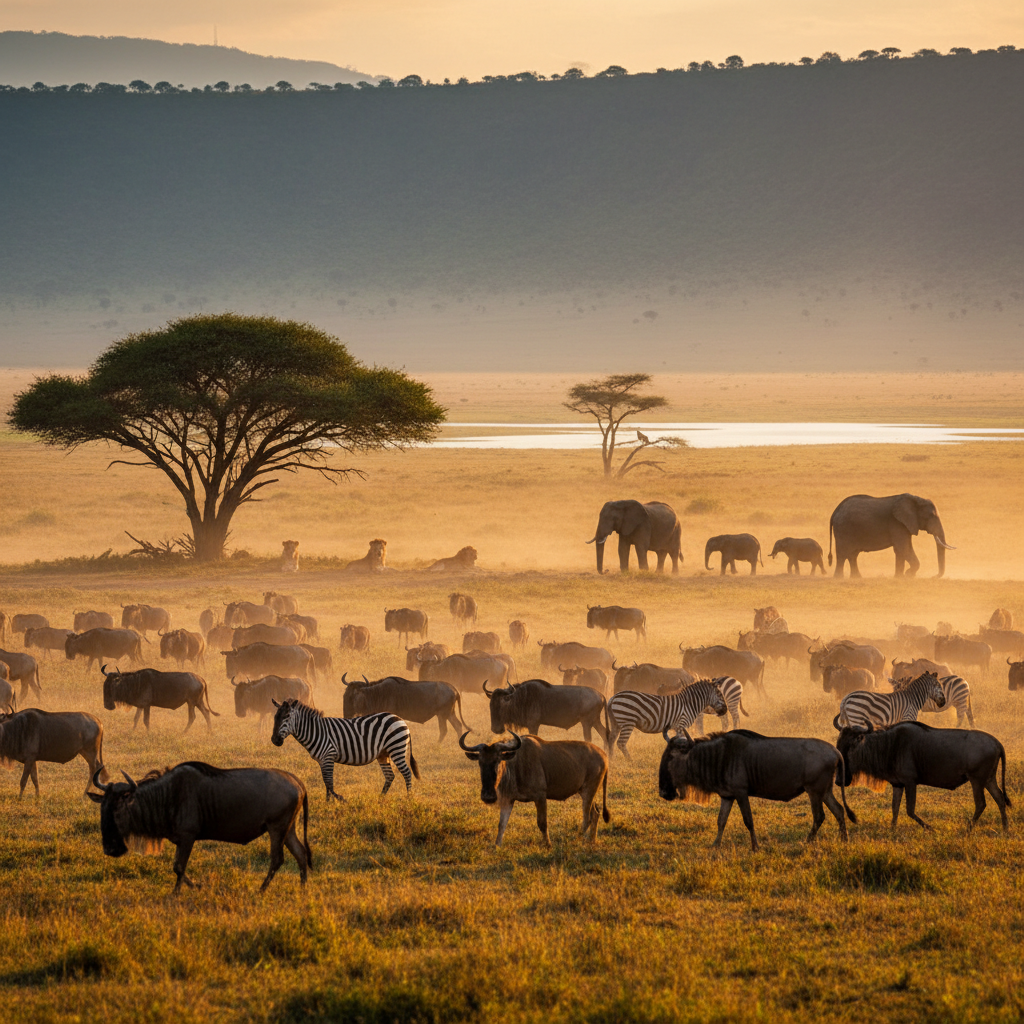
A safari in Tanzania is not just about wildlife. It's also about cultural experiences. Interact with local tribes like the Maasai and Hadzabe.
Tanzania's safaris cater to all types of travelers. Whether you seek luxury or budget-friendly options, there's something for everyone.
The country's safari industry is committed to conservation. Sustainable tourism practices ensure the protection of wildlife and habitats.
Tanzania's safaris are suitable for families, solo travelers, and groups. The country's political stability makes it a safe destination.
The best time to visit is during the dry season, from June to October. This period offers optimal wildlife viewing opportunities.
Tanzania's safari guides are highly trained. Their knowledge enhances the safari experience, providing insights into wildlife behavior.
The Serengeti's vast plains are perfect for hot air balloon safaris. This offers a unique perspective on the landscape and wildlife.
Tanzania's coastline and islands, like Zanzibar, offer post-safari relaxation. Enjoy pristine beaches and explore vibrant marine life.
Embark on a safari in Tanzania and discover the wonders of the wild. It's an adventure that promises unforgettable memories.
Overview of Safari in Tanzania
Tanzania is a premier safari destination in East Africa, offering a plethora of wildlife experiences. Its national parks are famed for their abundance of wildlife and spectacular scenery.
The country boasts diverse ecosystems. From the vast Serengeti plains to the lush forests of the Mahale Mountains, each region hosts unique wildlife.
One of Tanzania's most famous wildlife spectacles is the Great Migration. This annual event sees millions of wildebeest, zebras, and gazelles moving in a circular route through the Serengeti and the Masai Mara in Kenya.
The Ngorongoro Crater is another highlight. This massive volcanic caldera is teeming with wildlife, including elephants, lions, and flamingos. It's a must-visit on any safari itinerary.
In Tanzania, the Big Five roam freely. Spotting lions, elephants, buffalo, leopards, and rhinos is common, making every safari an exciting adventure.
A Tanzania safari isn't only about wildlife; cultural interactions enhance the experience. Visiting Maasai villages offers insight into local traditions and ways of life.
Tanzania provides various safari options to suit different preferences and budgets. Choose from luxury lodges, tented camps, or affordable travel packages.
Key Highlights of a Tanzanian Safari:
Witness the Great Migration in the Serengeti.
Explore the Ngorongoro Crater, a natural wildlife sanctuary.
Encounter the Big Five in their natural habitats.
Experience cultural exchanges with Maasai communities.
Discover diverse landscapes and ecosystems, from savannahs to mountains.
Enjoy various safari accommodations, from luxury lodges to budget-friendly camps.
Take part in conservation efforts and learn from knowledgeable guides.
Additionally, Tanzania's commitment to conservation ensures sustainable safari experiences. Well-managed parks preserve natural habitats, supporting thriving wildlife populations.
Tanzania's safari sector provides significant economic support to local communities. Tourism generates revenue, creating jobs, and funding conservation initiatives.
Overall, a safari in Tanzania offers more than just wildlife spotting. It combines adventure with educational opportunities, cultural experiences, and a chance to witness natural wonders.
From the excitement of the Great Migration to the serene beauty of the Ngorongoro Crater, a Tanzanian safari guarantees memorable moments. Whether you're a seasoned traveler or a first-time visitor, Tanzania promises a remarkable adventure.
Importance of African Safaris
African safaris hold immense significance in today's world, offering a unique blend of adventure, education, and conservation. They provide a window into the rich biodiversity of the African continent.
Safaris are crucial for wildlife conservation efforts. By visiting national parks and reserves, tourists directly support the preservation of these natural habitats. Entrance fees and safari bookings contribute to funding these conservation projects.
Another key aspect is the economic impact on local communities. Tourism provides income and creates jobs for those living around wildlife areas. This encourages community involvement in conservation initiatives, fostering a sense of ownership and responsibility.
Apart from economic and conservation benefits, safaris offer a transformative travel experience. They allow visitors to connect with nature in a profound way. Observing wildlife in their natural environment helps raise awareness about the importance of protecting these species.
Participating in a safari often includes an educational component. Many tours provide information about local ecosystems, animal behaviors, and conservation challenges. Knowledgeable guides enhance the experience, ensuring travelers learn while exploring.
Benefits of African Safaris:
Conservation: Directly funding wildlife preservation efforts.
Economic Support: Generating income and jobs for local communities.
Education: Learning about ecosystems and conservation challenges.
Connection with Nature: Promoting an appreciation for wildlife and habitats.
Cultural Engagement: Interacting with indigenous tribes and understanding their way of life.
Cultural interactions add to the safari's importance. Engaging with local tribes, such as the Maasai or Hadzabe, provides insights into their customs and traditions. It enriches the travel experience, offering a deeper understanding of cultural heritage.
Moreover, safaris encourage responsible tourism practices. They promote eco-friendly travel and raise awareness of the impacts of human activities on wildlife. Visitors are often introduced to sustainable practices that minimize ecological footprints.
In essence, African safaris contribute significantly to wildlife preservation, community development, and cultural exchange. They present opportunities to experience the wonders of Africa while promoting sustainable travel practices. For many, a safari isn't just a vacation; it's an eye-opening journey that inspires a lasting commitment to conservation and respect for nature.
The Best Safari Parks in Tanzania
Tanzania is blessed with some of the world's most impressive safari parks. These parks offer unmatched wildlife experiences and breathtaking landscapes.
Serengeti National Park stands out as the most famous park. It is renowned for hosting the Great Migration. This event showcases millions of wildebeests, zebras, and gazelles in an astonishing movement across the plains.
Ngorongoro Crater offers a different kind of safari. This UNESCO World Heritage Site is home to a dense population of wildlife living within its stunning caldera.
Additional parks worth mentioning include
Tarangire National Park: Known for its elephant herds and baobab trees.
Lake Manyara National Park: Famous for tree-climbing lions.
Selous Game Reserve: Offers a sense of wilderness and boasts one of the largest faunal reserves.
Visitors to these parks can expect to see the Big Five: lions, elephants, buffalos, leopards, and rhinos. Each park has its unique appeal, catering to different types of travelers. Whether you seek sprawling savannahs or lush volcanic landscapes, Tanzania's parks deliver extraordinary encounters.
Serengeti National Park
Serengeti National Park is Tanzania's flagship safari destination. It stretches over an immense area of approximately 14,750 square kilometers.
This park is famed for its vast, open plains teeming with wildlife. One of the highlights here is the Great Migration. It occurs annually and draws thousands of tourists worldwide.
Besides the migration, Serengeti is home to diverse ecosystems. You'll encounter grasslands, woodlands, and riverine forests, each supporting different wildlife.
A safari here offers a chance to see iconic African animals. Lions basking on rocks, elephants meandering through the bush, and cheetahs stalking prey are common sights.
The park also boasts over 500 bird species, making it a birdwatcher's paradise. Guides often tailor safaris to include birding sessions alongside game drives.
Highlights of Serengeti National Park:
Annual Great Migration: Witness millions of animals migrate.
Diverse Ecosystems: Explore various habitats and wildlife.
Big Five Sightings: View lions, elephants, and more in their natural home.
Bird Watching: Spot vibrant bird species throughout the park.
Tailored Tours: Enjoy customized experiences based on interests.
Serengeti offers numerous accommodation options, from luxury lodges to budget campsites. Each provides unique opportunities to engage with nature.
Visitors can also embark on hot air balloon safaris. These allow for a bird’s-eye view of the expansive plains and wildlife below.
Unique Wildlife Experiences
Serengeti's unique wildlife experiences go beyond traditional game drives. One such adventure is the night safari. This provides a rare look at nocturnal animals, which are often unseen during the day.
Another special experience is the walking safari. Led by armed guides, it offers a ground-level perspective of the park. Walking safaris provide an intimate encounter with the ecosystem and its residents.
The Great Migration is unrivaled. Witnessing this mass movement is a bucket-list experience for many travelers. Visitors can see crossings at the Grumeti and Mara Rivers, where crocodiles await their prey.
Unique Wildlife Experiences in Serengeti:
Night Safaris: Discover elusive nocturnal creatures.
Walking Safaris: Get close to nature on foot.
The Great Migration: Marvel at a massive wildlife spectacle.
River Crossings: Experience nature's dramatic predator-prey interactions.
Cultural Visits: Learn about the Maasai communities around the Serengeti.
Cultural visits to Maasai villages around the Serengeti add depth to the safari experience. These provide insights into local traditions and lifestyles, enriching the overall journey.
Visitors can also engage in conservation efforts. Participating in wildlife monitoring programs adds purpose and understanding to the safari.
Ngorongoro Crater
Ngorongoro Crater offers one of the most spectacular safari experiences in Africa. This massive volcanic caldera is home to abundant wildlife.
The crater spans about 260 square kilometers and is teeming with life. It hosts approximately 25,000 animals, ensuring rich wildlife diversity.
Ngorongoro provides a unique opportunity to see all of Africa's Big Five in one location. This compact area makes wildlife viewing accessible and exciting.
A highlight of visiting Ngorongoro is its geological wonder. Visitors often stop at viewpoints on the crater rim. Here, they enjoy breathtaking views of the caldera's lush green floor below.
Key Attractions in Ngorongoro Crater:
Dense Wildlife Population: Spot thousands of animals within the crater.
Big Five Encounters: Easily view lions, leopards, elephants, rhinos, and buffalo.
Stunning Landscape: Admire the natural beauty from the crater rim.
Cultural Interactions: Visit nearby Maasai communities.
The crater itself supports high densities of wildlife. Predators like lions and hyenas roam freely, while hippos enjoy the crater's central lake.
Surrounding Maasai communities are integral to the Ngorongoro experience. Visitors can learn about Maasai culture, their ancestral lands, and cohabitation with wildlife.
Breathtaking Landscapes
Ngorongoro Crater's landscapes are nothing short of mesmerizing. The contrast between the crater's green floor and the rugged rim is striking.
Its fertile grasslands are the grazing grounds for many herbivores. Elephants, zebras, and buffalos are common, adding life to the scenic views.
Aside from the animals, the crater hosts diverse plant species. These include lush vegetation and clusters of acacia trees, enhancing the park's beauty.
The landscapes offer an ideal setting for photographers. Visitors can capture stunning images of both wildlife and scenery.
Landscapes in Ngorongoro Crater:
Green Fields: Fertile grasslands support diverse herbivores.
Acacia Trees: Iconic tree species dot the landscape.
Lakes and Waterholes: Provide water sources for animals and birds.
Rim Vistas: Spectacular views from the crater's edge.
Ngorongoro's varied landscapes provide habitats for many bird species. The colorful flamingos in the crater's lake add a vibrant touch to the scenery.
This breathtaking setting is a must-visit for anyone keen on capturing the essence of Tanzania's natural beauty and wildlife. It offers a unique and unforgettable safari experience.
Planning Your Safari Trip
Planning a safari trip to Tanzania involves several key decisions. Careful planning ensures a memorable and smooth experience.
First, consider your budget. Safaris in Tanzania offer diverse options ranging from luxurious lodges to budget-friendly camping.
Next, choose the type of safari experience you want. Decide whether you prefer a traditional game drive or something unique like a walking safari.
When planning, also think about the safari parks you want to visit. Tanzania has multiple renowned parks, each with unique attractions.
Considerations for Planning Your Safari Trip:
Budget: Choose between luxury and budget-friendly options.
Safari Type: Select preferred safari experiences and activities.
Parks to Visit: Decide which parks align with your interests.
Season: Align your visit with the optimal time for specific wildlife events.
Remember to book your accommodations and safari tours in advance. Popular parks like Serengeti and Ngorongoro get busy, especially during peak season.
Ensure you have all necessary travel documents, including visas and vaccinations. It's also a good idea to check for any travel advisories.
Best Time to Visit
Timing is crucial when planning a safari in Tanzania. The country offers different wildlife experiences across seasons.
The best time to visit is during the dry season, from June to October. This period provides prime game viewing as animals gather around water sources.
During these months, the Serengeti hosts the dramatic river crossings of the Great Migration. Witnessing this event is unforgettable.
Optimal Periods for a Safari in Tanzania:
Dry Season (June-October): Best time for wildlife viewing.
Great Migration: Witness wildebeest and zebras cross the Mara River.
Wet Season (November-May): Lush landscapes and fewer tourists.
The wet season, from November to May, offers lush landscapes and abundant birdlife. However, heavy rains can lead to challenging travel conditions.
If you're a bird enthusiast, consider visiting between November and February. These months attract migratory birds, enriching the birdwatching experience.
Regardless of the season, Tanzania's parks provide incredible wildlife encounters. Each season brings unique experiences, catering to varied interests.
Choosing between Kenya and Tanzania Safaris
Selecting between a safari in Kenya or Tanzania depends on personal interests and priorities. Both countries offer exceptional wildlife experiences.
Kenya's Masai Mara is famous for its rich culture and wildlife. It hosts the Great Migration alongside Tanzania, offering thrilling safari adventures.
Tanzania's Serengeti, however, is often preferred for its vast wilderness and diversity. The park is larger, offering more extensive safari options.
Considerations when Choosing a Safari Destination:
Migration Viewing: Both Kenya and Tanzania offer Great Migration experiences.
Safari Parks: Serengeti's vastness vs. Masai Mara's concentrated wildlife.
Cultural Experiences: Maasai interactions in Kenya and Tanzania differ.
Travel Logistics: Consider accessibility and travel duration.
Tanzania is also home to unique natural wonders like Ngorongoro Crater. This geological marvel adds a spectacular backdrop to a Tanzania safari.
Kenya, on the other hand, excels in cultural experiences with its rich Maasai heritage. Visitors can engage with local communities, gaining insights into their traditions.
Ultimately, choosing between Kenya and Tanzania comes down to the specific experiences you seek. Each destination offers unforgettable encounters with Africa's extraordinary wildlife.
Safari Experience Comparison
A safari experience in Tanzania and Kenya offers distinct yet captivating encounters with nature and wildlife. Both destinations are renowned for their extraordinary biodiversity and unique landscapes.
In Tanzania, the vastness of the Serengeti and the stunning Ngorongoro Crater provide a backdrop for diverse wildlife spectacles. Tanzania's national parks boast a comprehensive selection of habitats, from lush forests to expansive savannahs.
Kenya, with its iconic Masai Mara, presents an equally compelling safari adventure. Its compact size allows for concentrated wildlife viewing, making it a favorite for many safari enthusiasts. Moreover, Kenya's cultural richness, paired with its breathtaking landscapes, adds depth to the safari experience.
Comparing Safari Experiences in East Africa:
Wildlife Diversity: Tanzania's broad range vs. Kenya's concentrated viewings.
Cultural Depth: Rich Maasai culture in both countries.
Accessibility: Kenya’s close proximities vs. Tanzania’s expansive parks.
Scenic Landscapes: Stunning vistas in Ngorongoro vs. open Mara plains.
Ultimately, both countries excel in providing unforgettable safari experiences, each with its distinct allure and focus.
Tanzania vs. Kenya Safari
Choosing between a safari in Tanzania and Kenya can be challenging due to the incredible offerings both countries present. Each destination is home to unique ecosystems and animal populations that enrich the safari experience.
Tanzania's Serengeti National Park is synonymous with the Great Migration, one of nature's most dramatic spectacles. Here, travelers witness large herds of wildebeest and zebras crossing crocodile-infested rivers as part of their migratory path.
Kenya's Masai Mara is celebrated for similar phenomena, notably with its sharply concentrated wildlife. Due to its smaller size, Kenya's Masai Mara offers easier spotting of the Big Five.
Key Differences between Tanzania and Kenya Safaris:
Migration Hotspots: Serengeti’s expansiveness vs. Masai Mara’s density.
Safari Diversity: From walking safaris in Tanzania to cultural tours in Kenya.
Visibility: High visibility in Masai Mara vs. Serengeti's vast terrains.
Eco-Experience: Focus on eco-friendly lodges and practices.
Both nations offer excellent opportunities for big game photography, cultural immersion, and intimate wildlife encounters. Tanzania offers different habitats like the Selous Game Reserve, known for remoteness and fewer crowds.
While Tanzania can provide a sense of wild untamed exploration, Kenya's terrain allows for intensive wildlife watching within smaller areas. Both safari experiences offer unique perspectives, promising unforgettable travel adventures.
Masai Mara National Park Safari
The Masai Mara National Park, lying within Kenya's boundaries, is an iconic destination for wildlife viewing. Visitors to the Masai Mara are treated to thrilling safari adventures that showcase Kenya's natural grandeur.
This park is renowned for hosting a section of the Great Migration, where millions of zebras and wildebeest traverse its plains. Observers can witness one of the planet's most astounding wildlife events, sometimes referred to as the "eighth wonder of the world."
The Masai Mara offers a remarkable diversity of wildlife, all within a relatively compact area, allowing for profound interactions. Besides the famed wildebeest, visitors can expect to see elephants, lions, and hippos inhabiting its rolling landscape.
Highlights of a Masai Mara Safari:
Great Migration: Experience this annual and breathtaking natural phenomenon.
Big Five Viewing: Spot lions, leopards, elephants, rhinos, and buffalo.
Cultural Excursions: Engage with the Maasai people for authentic insights.
Photographic Opportunities: Capture unparalleled wildlife scenes.
Besides offering great photography opportunities, Masai Mara invites cultural engagements with the Maasai community. Their villages and crafts provide rich cultural insights that enhance the overall safari experience.
Cultural Experiences in Kenya
Cultural experiences in Kenya provide an enriching dimension to the standard safari adventure. The land is a mosaic of tribes, each contributing to Kenya's vibrant cultural tapestry.
A visit to a Maasai village offers an authentic look into the traditional lifestyle of one of Africa's most known tribes. Visitors learn about their customs, dress, and community life firsthand.
Kenya also offers cultural festivals that provide deeper insights into diverse tribes. These festivals celebrate music, dance, and local foods, enriching the traveler's understanding of Kenya’s cultural identity.
Cultural Insights in Kenya:
Maasai Communities: Discover iconic customs and traditional practices.
Local Festivals: Experience lively music and traditional dances.
Craft Markets: Shop for handmade beads, textiles, and carvings.
Heritage Tours: Gain knowledge of diverse tribal histories and stories.
Beyond the Maasai, Kenya encompasses many ethnic groups like the Kikuyu, Luhya, and Luo, each with distinctive traditions. Tours often incorporate visits to local markets and artisan workshops.
Such activities enrich the safari, ensuring it's not only about wildlife but also about connecting with Kenya's pulse. These cultural elements foster a holistic journey for any safari traveler venturing through this incredible country.
Conclusion
Embarking on a safari in Tanzania unveils an extraordinary realm where nature's beauty knows no bounds. The country's vast landscapes, diverse wildlife, and welcoming cultures create an exceptional adventure for all who visit. Whether traversing the endless plains of the Serengeti or marveling at the majesty of the Ngorongoro Crater, Tanzania offers experiences that linger long after the journey ends.
Both first-time travelers and seasoned explorers find the allure of Tanzania's safaris hard to resist. The vibrant ecosystems and community-driven tourism make it a top choice for sustainable travel. In choosing Tanzania, visitors not only witness breathtaking wildlife but also contribute to vital conservation efforts.
Why Choose Safari Tanzania
Tanzania stands out as a premier safari destination, offering unparalleled wildlife experiences in extraordinary settings. Its national parks, such as the Serengeti and Ngorongoro Crater, are teeming with life and host to iconic African species. The Great Migration alone is reason enough to choose Tanzania for an unforgettable safari trip.
The country's commitment to conservation ensures that the natural wonders remain preserved for future generations. Tanzanian safaris are also deeply rooted in responsible tourism practices, promoting environmental sustainability and supporting local communities. From eco-friendly lodges to cultural tours, every aspect enriches the overall experience.
Considerations for choosing Safari Tanzania include
Diverse Landscapes: From savannahs to calderas.
Conservation Focus: Engaging in eco-friendly tourism.
Rich Wildlife: Encounter the Big Five and more.
Cultural Interactions: Visit local tribes for unique insights.
Tanzania's distinct appeal lies in its ability to combine natural beauty with meaningful travel experiences. The country's safari offerings promise adventure, education, and a profound connection to the earth's natural wonders.
Final Thoughts on Your Adventure
Embarking on a safari in Tanzania is more than a vacation—it's a transformative journey into one of nature's most pristine environments. Each moment spent amidst the wild becomes a precious memory, reminding travelers of the planet's astonishing diversity. From sunrise game drives to intimate cultural interactions, your adventure in Tanzania opens doors to insights and wonders.
Beyond the wildlife, Tanzania's warm hospitality and vibrant cultures leave a lasting impression. Travelers often find themselves deeply moved by the beauty they experience and the connections they make. The country's commitment to conservation and community empowerment ensures that your travel has a positive impact.
As you plan your safari, embrace the opportunity to immerse yourself in Tanzania’s awe-inspiring landscapes. Take comfort in knowing that every moment spent in this remarkable country is a step toward understanding and preserving the incredible world we share.