A Zanzibar and Kenya eSIM gives you seamless mobile data across both destinations without swapping SIM cards. Regional plans from SafarieSIM cover Kenya, Tanzania, and Zanzibar under one digital profile, eliminating roaming fees and border hassles. Install before you fly, activate on arrival, and stay connected throughout your safari and beach holiday with reliable 4G coverage in cities, parks, and coastal areas.
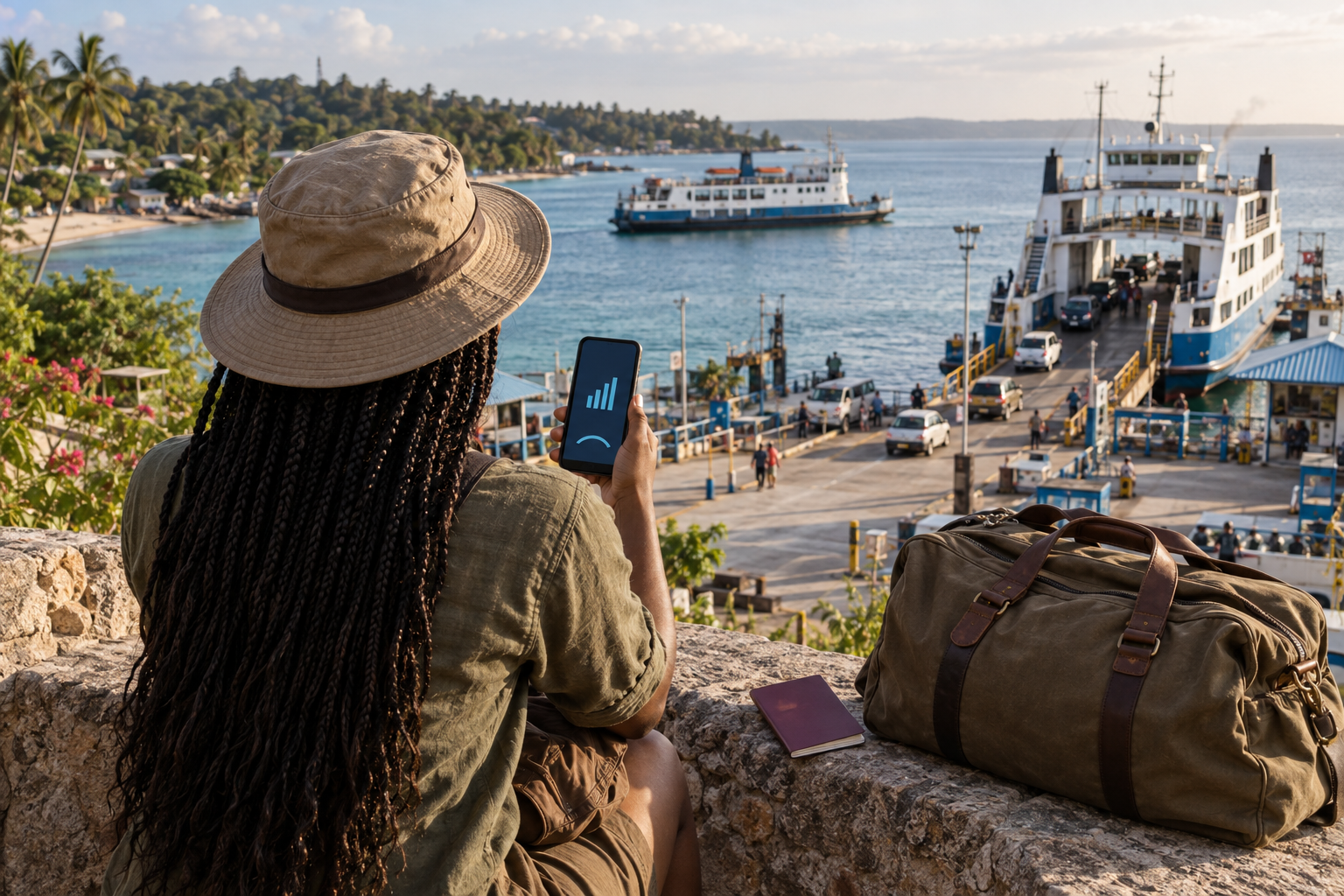
One regional eSIM keeps mobile data available across Kenya, Tanzania, and Zanzibar.
Traveling between Kenya's game reserves and Zanzibar's beaches means crossing international borders, dealing with multiple carriers, and risking connectivity gaps when you need directions, booking confirmations, or updates from your safari operator. An eSIM for Zanzibar and Kenya eliminates the hassle of buying physical SIM cards at each border crossing, paying inflated roaming charges, or losing coverage the moment you land in Tanzania.
Key takeaways:
One regional eSIM covers Kenya, Tanzania, and Zanzibar without switching SIM cards
SafarieSIM's Africa and Africa Safari plans work across all three destinations
Plans start at lower cost than airport SIM vendors or carrier roaming
Install before departure, activate on arrival, stay connected for your entire trip
Coverage includes national parks, Zanzibar town, Stone Town, and coastal resorts
Cross Borders Without Swapping SIM Cards or Paying Roaming Fees
A Kenya and Tanzania eSIM means you download a digital profile to your phone before you fly. Turn on data when you land in Nairobi or Dar es Salaam. Keep the same connection when you cross into Tanzania or catch the ferry to Zanzibar. No hunting for a shop that sells tourist SIM cards. No negotiating with vendors at the airport. No missed WhatsApp messages because you switched phones or lost your old number.
Standard international roaming from US or European carriers charges $10 to $15 per day in Kenya and Tanzania. A two-week safari becomes a $200 phone bill. Local SIM cards require passport copies, registration forms, and separate purchases in each country. SafarieSIM's regional plans cover Kenya, Tanzania, and Zanzibar under one data package, charging a flat rate for your entire trip.
Roaming scenario | Cost |
|---|---|
Standard international roaming per day in Kenya and Tanzania | $10 to $15 |
Two-week safari using standard international roaming | $200 phone bill |
International roaming fees can add up quickly on a two-week East Africa trip.
Your phone works the same way it does at home. Turn on mobile data, connect to the local network, and your apps update in the background. Email loads. Maps show turn-by-turn directions to your lodge. Booking platforms send confirmation codes without delay.
Who This eSIM Is For: Safari Travelers, Island Visitors, and Multi-Country Explorers
This regional Africa eSIM suits anyone combining Kenya's safari parks with Zanzibar's coast, travelers booking multi-country tours, and visitors who need reliable mobile data across East Africa. It works if you're flying into Nairobi, driving through the Masai Mara, crossing into the Serengeti, then finishing your trip on Zanzibar's beaches. It also works if you're starting in Dar es Salaam and island-hopping before heading to Kenya's coast.
Solo travelers need steady connectivity for ride-hailing apps, accommodation check-ins, and emergency contact. Families traveling together share a hotspot to keep multiple devices online without buying separate data plans for each phone. Business travelers attending conferences in Nairobi or Dar es Salaam stay reachable without activating expensive corporate roaming.
The eSIM does not replace your home number. Your primary SIM stays active for calls and texts from your usual contacts, while the eSIM handles data. You choose which line to use for each task in your phone's settings.
Reliable Mobile Data for Maps, Messaging, Bookings, and Safari Updates
Safari lodges and beach resorts often advertise WiFi, but in practice you get slow speeds shared across dozens of guests. Or network access that drops after sunset. A dedicated eSIM for Kenya gives you your own mobile data connection that works outside the lodge, on game drives, during transfers, and when you need to look up visa requirements or flight changes.
Google Maps requires continuous data to download routes and recalculate when you take a wrong turn. WhatsApp needs internet to send location pins to your driver or confirm pickup times with tour operators. Booking platforms email you updates, gate changes, and reservation codes that you cannot access if you're waiting for WiFi to reconnect.
Zanzibar mobile data keeps you connected in Stone Town's markets, on boats to Prison Island, and at beach hotels along the east coast. Kenya coverage extends to Nairobi, Mombasa, the Masai Mara, Amboseli, and Lake Nakuru. Tanzania's network reaches Arusha, the Serengeti, Ngorongoro Crater, and Dar es Salaam.
Video calls home run smoothly on 4G networks in urban areas. Streaming music or uploading photos consumes data quickly, so choose a plan with enough capacity for your usage or connect to WiFi for large downloads.
Coverage Across Kenya, Zanzibar, Tanzania, and Popular Safari Destinations
SafarieSIM routes your connection through local carrier networks in each country. In Kenya, that typically means Safaricom or Airtel. In Tanzania and Zanzibar, you connect via Vodacom or Airtel Tanzania. Your phone automatically selects the strongest available network when you cross borders or move between regions.
Coverage inside national parks depends on tower placement. The Masai Mara has decent signal along main routes and near lodges, but expect gaps in remote sections of the reserve. The Serengeti offers intermittent coverage near camps and ranger stations. Ngorongoro Crater has signal on the rim but limited connectivity on the crater floor. Zanzibar's populated areas and beaches maintain strong 4G. Inland villages and rural roads may drop to 3G or lose signal entirely.
Cities like Nairobi, Mombasa, Arusha, and Dar es Salaam provide consistent high-speed data. Smaller towns and coastal villages outside the main tourist zones can experience slower speeds during peak hours.
If you plan to visit very remote parks like Tsavo East or Ruaha, check with your safari operator about network availability. Some lodges use satellite internet instead of relying on mobile towers.
Price Comparison: Africa, Africa Safari, Tanzania, and Kenya eSIM Plans
SafarieSIM offers four regional plans that cover Kenya and Zanzibar. Each plan varies by the number of countries included, data allowance, and validity period. Prices are lower than daily roaming fees from most international carriers and comparable to buying multiple local SIM cards without the registration hassle. Read the content on each plan page carefully to understand what coverage and data limits apply to your specific itinerary.
Plan | Countries Covered | Data Allowance | Validity | Best For |
|---|---|---|---|---|
40+ African countries including Kenya, Tanzania, Zanzibar | Varies by package | Up to 30 days | Multi-country trips, long stays, regional travel | |
Kenya, Tanzania, Zanzibar, select safari destinations | Varies by package | Up to 30 days | Safari-focused itineraries, game reserve visits | |
Tanzania and Zanzibar | Varies by package | Up to 30 days | Tanzania-only trips, Zanzibar beach holidays | |
Kenya only | Varies by package | Up to 30 days | Kenya-focused safaris, Nairobi business trips |
The Africa plan covers the most countries, making it the right choice if you're also visiting Rwanda, Uganda, South Africa, or Egypt on the same trip. The Africa Safari plan focuses on East African safari destinations and typically costs less than the full Africa package. Single-country plans work if you're spending your entire trip in one place.
Each plan offers multiple data tiers. Light users checking email and maps can choose smaller packages. Heavy users streaming video, uploading photos, or running business applications need higher-capacity options. Most travelers on a two-week safari use between 3GB and 10GB depending on how often they share content and make video calls.
Choose the Right Data Package by Destination, Trip Length, and Data Needs
Start by listing where you're going and how long you'll stay in each place. A Kenya-only safari lasting one week needs less data than a three-week trip crossing Kenya, Tanzania, and Zanzibar. If you're spending most of your time in lodges with WiFi, you'll use mobile data mainly during travel days and excursions. If you're camping or staying in remote areas, you'll rely on mobile data for everything.
Calculate your typical daily usage at home, then reduce it by about 30 percent. You won't stream as much video on safari. You'll spend more time offline during game drives and activities. Budget extra data if you plan to work remotely, attend virtual meetings, or upload large photo libraries to cloud storage.
SafarieSIM's 30-day plans suit most safari itineraries. If you're staying longer, purchase a second plan or look for extension options. If you're visiting for less than a week, smaller data packages prevent paying for unused capacity.
The Africa Safari plan makes sense if Kenya and Tanzania are your only stops. The broader Africa plan costs more but includes countries like Rwanda (for gorilla trekking) or South Africa (for city visits after your safari). The Tanzania-only plan works for Zanzibar beach holidays combined with mainland parks like the Serengeti and Ngorongoro. The Kenya plan fits Nairobi arrivals with Masai Mara or Amboseli as your primary destinations.
Read the plan details on each product page to confirm data limits, speed restrictions after hitting your cap, and whether unused data rolls over or expires at the end of your validity period. Understanding the full content of each plan helps you avoid surprises mid-trip.
How to Check Compatibility, Set Up Your Profile, and Connect on Arrival
Your phone needs to support eSIM technology and be carrier-unlocked. Most iPhones from the XS and newer are compatible. Recent Samsung Galaxy, Google Pixel, and other Android flagships include this capability. Older devices and budget phones often lack the feature. Check SafarieSIM's compatibility list or look in your phone's settings under "Mobile Data" or "Cellular" to see if you have an option to add a digital profile.
Carrier-locked phones cannot use third-party profiles. Contact your home carrier before your trip to request an unlock if you're still under contract or paying off your device.
Once you purchase your package, SafarieSIM sends a QR code to your email within minutes. Open the message on a different device or print the code. Go to your phone's digital profile settings and select "Add Mobile Plan" or "Add eSIM." Scan the QR code with your phone's camera, follow the on-screen prompts, and your profile downloads as a secondary line.
Do not activate the profile until you arrive in Kenya, the mainland, or the islands. Setting up the profile is separate from turning on service. Complete this step at home while you still have WiFi, then enable mobile connectivity for your new line after you clear customs and immigration at your destination airport.
In your phone's settings, set your new profile as the default line for mobile connectivity and keep your primary SIM active for calls and SMS. Some phones require you to manually select the operator when you first enable service. Choose Safaricom in Kenya or Vodacom on the mainland and islands, then let your phone connect automatically on future uses.
If the operator does not connect immediately, turn airplane mode on and off, restart your phone, or check that roaming is enabled for your new line. SafarieSIM's message includes setup instructions and a support contact if you need help.
What to Expect When Crossing Between Kenya, Tanzania, and Zanzibar
Your eSIM switches networks automatically when you cross borders. The transition takes a few minutes as your phone scans for available carriers and registers with the new network. You might see "No Service" briefly. Then your phone connects to the local provider and resumes data access.
Crossing from Kenya into Tanzania by land at the Namanga or Isebania border posts means your phone switches from Kenyan networks to Tanzanian ones as soon as you pass through immigration. Flying from Nairobi to Zanzibar triggers the same switch when you land and turn off airplane mode.
Zanzibar is part of Tanzania but uses the same mobile networks. Your eSIM treats Zanzibar and mainland Tanzania as one region. The ferry from Dar es Salaam to Zanzibar does not require a separate plan or additional charges.
If your phone does not reconnect after crossing a border, toggle airplane mode or manually select the network in your settings. Border areas sometimes have weak signal, so wait until you're a few kilometers into the new country before troubleshooting.
Your eSIM's data allowance applies across all covered countries. Using 2GB in Kenya and 3GB in Tanzania consumes 5GB from your total package, not separate buckets per country.
SafarieSIM vs Airalo, Local SIM Cards, and International Roaming
Airalo offers global eSIM plans but operates through reseller networks that sometimes deliver slower speeds or limited coverage in rural areas. SafarieSIM focuses specifically on Africa and partners directly with regional carriers, which often results in better performance inside national parks and remote lodges. Prices between the two platforms vary by package and promotion timing, so compare current rates before purchasing.
Local SIM cards from Safaricom in Kenya or Vodacom in Tanzania cost less per gigabyte than most eSIM plans. But you need to visit a carrier store, present your passport, complete registration forms, and buy a new SIM for each country. Registration can take 30 minutes to an hour. Some border towns lack carrier shops. You also lose access to your home number while the local SIM is active unless your phone supports dual SIM.
International roaming from US carriers like Verizon, AT&T, or T-Mobile charges daily fees that add up quickly. A 14-day safari costs $140 to $210 in roaming fees alone, and you often get reduced speeds or data caps. European carriers offer slightly better roaming deals, but most still charge per-day rates higher than a regional eSIM.
SafarieSIM sits between local SIM cards and international roaming in price and convenience. You pay more than a local SIM but less than carrier roaming, and you avoid the time and hassle of buying physical cards at each stop.
Common Concerns About Networks, Hotspots, Calls, Top-Ups, and Support
Your eSIM provides data only. To make phone calls, use internet-based apps like WhatsApp, Skype, or FaceTime over your data connection. Your primary SIM remains active for traditional calls and SMS, though your carrier may charge international rates. Most travelers rely on WhatsApp for voice calls and messaging because it works over data and does not incur per-minute charges.
Hotspot functionality depends on your phone's capabilities and your eSIM plan. SafarieSIM generally allows tethering, so you can share your mobile data with a laptop, tablet, or travel companion's phone. Check your plan's terms to confirm no restrictions apply.
Running out of data mid-trip requires purchasing a top-up or a new plan. SafarieSIM's website lets you buy additional data packages and install them as secondary eSIMs. Some plans allow you to add data to your existing profile without reinstalling a new QR code. Keep track of your usage in your phone's settings to avoid surprise depletion.
Network speed varies by location. Nairobi and Dar es Salaam typically deliver 10 to 30 Mbps on 4G. Rural areas and parks drop to 1 to 5 Mbps or fall back to 3G. That speed is enough for maps, messaging, and email but may struggle with video streaming or large file uploads.
Customer support is available via email if you encounter activation issues, connection problems, or billing questions. Response times vary, so reach out as soon as you notice an issue rather than waiting until you're deep in the Serengeti with no backup plan. Install and test your eSIM before leaving a major city where you can find WiFi or local assistance if needed.
Using Your eSIM for Social Media, Navigation, and Staying in Touch
Social media apps like Instagram, Facebook, and TikTok consume significant data when auto-playing videos or uploading high-resolution photos. Disable auto-play in app settings and upload content only when connected to WiFi if you want to conserve your data allowance. Posting stories and sharing safari highlights works smoothly on 4G networks in cities and well-covered park areas.
Navigation apps such as Google Maps and Maps.me rely on real-time data for route updates and traffic information. Download offline maps for Kenya, Tanzania, and Zanzibar before your trip to reduce data usage and ensure you have backup navigation if you enter areas with weak coverage. Offline maps work without an internet connection but cannot show live traffic or route alternatives.
Messaging apps like WhatsApp, Telegram, and Signal use minimal data for text messages but consume more when sending photos, videos, or voice notes. Compress images before sending or wait until you're on WiFi to share large files. Video calls use approximately 500MB per hour, so budget accordingly if you plan regular check-ins with family or colleagues.
How eSIM Technology Benefits Multi-Destination African Travel
Traditional SIM cards require physical swapping every time you cross a border or visit a new country. An eSIM eliminates that friction by storing multiple carrier profiles digitally on your phone. You activate the relevant profile for each destination without removing hardware or losing your primary number.
For travelers visiting multiple African countries beyond Kenya and Zanzibar, a regional eSIM becomes even more valuable. The Africa plan from SafarieSIM covers over 40 countries, letting you move from East Africa to Southern Africa or North Africa without purchasing new SIM cards or dealing with local carrier registration in every country.
Business travelers attending conferences across multiple cities benefit from uninterrupted connectivity. Tourism professionals scouting locations for future trips avoid downtime between destinations. Long-term travelers exploring the continent over several months maintain one consistent data connection rather than managing a collection of local SIM cards.
Your phone's eSIM capability supports multiple profiles simultaneously, so you can install several regional plans and switch between them as needed. This flexibility makes eSIM technology particularly useful for complex, multi-country itineraries where border crossings happen frequently.
Understanding Data Speeds and Network Performance in East Africa
4G LTE networks in Kenya, Tanzania, and Zanzibar deliver download speeds between 5 and 30 Mbps in urban areas and well-covered tourist zones. Safaricom in Kenya and Vodacom in Tanzania operate the most extensive networks with the fastest speeds. Airtel provides secondary coverage but often at reduced speeds, particularly in rural areas.
National parks and game reserves have limited tower infrastructure, so expect 3G speeds or intermittent 4G. The Masai Mara's main camps and lodges maintain decent connectivity, but coverage drops significantly in the reserve's western and northern sections. The Serengeti offers 3G near the central areas and major camps, with large dead zones in remote sections.
Zanzibar's Stone Town and beach resort areas along the east coast maintain strong 4G coverage. The Jozani Forest and rural villages in the island's interior experience slower speeds and occasional signal loss. Offshore islands like Mnemba and Chumbe have no mobile coverage, so plan accordingly if you're visiting for diving or snorkeling trips.
Network congestion affects speeds during peak hours, typically early evening when locals finish work and tourists return to lodges. Download important documents, maps, or content during off-peak hours for faster performance. If you need to upload large files or attend video meetings, morning hours generally deliver better speeds.
Preparing Your Device and Backup Plans Before Departure
Before leaving home, verify that your phone is carrier-unlocked and eSIM-compatible. Test the eSIM installation process by scanning the QR code and confirming the profile appears in your phone's mobile data settings. Do not activate data yet, but ensure the profile installs without errors.
Download offline maps for all regions you plan to visit. Google Maps, Maps.me, and Organic Maps all support offline navigation for Kenya, Tanzania, and Zanzibar. Store important travel documents, booking confirmations, and emergency contact numbers in offline-accessible apps or cloud storage with offline mode enabled.
Bring a portable power bank with at least 10,000 mAh capacity to keep your phone charged during long game drives and travel days. Many safari vehicles lack charging ports, and lodges sometimes experience power outages or restrict electricity hours to conserve generator fuel.
Keep a written or printed record of your eSIM QR code and activation instructions in case your phone is lost, damaged, or stolen. Some eSIM providers allow you to reinstall the same profile on a replacement device, but you'll need the original QR code or account credentials to do so.
Consider purchasing travel insurance that covers device loss or damage. A broken phone in the middle of a safari can leave you without communication, navigation, or access to important travel documents. Insurance policies that include device replacement help minimize trip disruption.
Additional Resources for Planning Your Kenya and Zanzibar Trip
For comprehensive travel planning beyond connectivity, consult resources that cover visa requirements, health precautions, and safety guidelines. The Lonely Planet Tanzania guide provides detailed destination information for Zanzibar and mainland Tanzania. The Kenya Tourism Board offers official information on Kenya's national parks, accommodations, and travel logistics.
Safari tour operators like SafariBookings and TourRadar aggregate reviews and pricing for multi-country East African itineraries. Read recent traveler feedback to identify reliable operators and realistic expectations for accommodation quality, guide expertise, and animal sighting opportunities.
Health preparations for East Africa include yellow fever vaccination, malaria prophylaxis, and standard travel immunizations. The CDC and WHO websites provide up-to-date health advisories for Kenya and Tanzania. Zanzibar is generally low-risk for malaria compared to mainland parks, but mosquito protection remains important.
Travel forums like TripAdvisor and Reddit's r/travel contain recent firsthand accounts from travelers who have completed similar itineraries. These sources help you understand current conditions, unexpected challenges, and practical tips that official resources may not cover.
FAQs: The Best Zanzibar eSIM, Kenya–Tanzania Trips, Africa Travel, and Zanzibar Safety
Which option is right for the islands?
The right option for the islands depends on whether you're visiting only this destination or combining it with the mainland and Kenya. If you're staying on the island and mainland, the eSIM for this region covers both areas. If you're also visiting Kenya or other East African countries, choose the Africa or Africa Safari package for full access without buying multiple options. All SafarieSIM choices function on Vodacom and Airtel operators in this region. Read each package's details to match your specific route.
Can you do Kenya and Tanzania together?
Yes. Kenya and Tanzania border each other, and many safari itineraries combine the Masai Mara in Kenya with the Serengeti and Ngorongoro Crater in Tanzania. You cross at land borders like Namanga or Isebania, or fly between Nairobi and Arusha. A regional eSIM covers both countries under one plan, so your phone works continuously as you move between game reserves and cities. Most travelers spend 10 to 14 days covering both countries, though longer trips are common. Border crossings require valid visas for both countries, which you can obtain in advance or at the border depending on your nationality.
What's the right choice for the continent?
The right choice for the continent depends on your route. For East African destinations (Kenya, the mainland, Uganda, Rwanda), a regional package provides access across game viewing areas and major cities. For trips spanning multiple regions—such as combining East with South or North—the broader continental package covers 40+ countries. Single-country options are suitable if you're staying in one place. Compare allowances, validity periods, and operator partners before choosing. Read user reviews and verify that your specific destinations have adequate signal from the package's carrier partners.
Is it safe to go to Zanzibar right now?
Zanzibar is generally safe for tourists, with lower crime rates than many mainland Tanzanian cities. The island's economy relies heavily on tourism, and local authorities maintain security around hotels, beaches, and popular attractions like Stone Town. Petty theft and bag snatching occur in crowded markets, so keep valuables secure. Check current travel advisories from your government before booking, as regional conditions can change. Most visitors experience no safety issues and find Zanzibar welcoming and calm. Exercise normal travel precautions: avoid walking alone late at night in isolated areas, use registered taxis or ride-hailing apps, and respect local customs, particularly regarding dress in more conservative neighborhoods.
Choose Your Plan and Get Connected Before Your Safari
Pick your plan based on where you're going and how long you'll stay. If you're combining Kenya's Masai Mara with Zanzibar's beaches, the Africa Safari plan covers both destinations. If you're adding Rwanda or South Africa to your trip, the broader Africa plan works better. If you're focusing on one country, the Tanzania or Kenya plans cost less and still deliver full coverage.
Purchase your eSIM at least a few days before departure so you have time to install the profile, test the connection, and contact support if you run into compatibility issues. Install the QR code while you have WiFi at home. Activate mobile data when you land in Africa. Your phone connects automatically, and you're online within minutes of clearing customs.
Visit SafarieSIM's destination page to compare plans, check data options, and complete your purchase. Your eSIM arrives via email immediately after payment, ready to install and use as soon as you arrive.