


is kenya safe to visit — Yes, Kenya is safe to visit, as long as you check the Foreign, Commonwealth & Development Office (FCDO) travel advice before you book and follow local guidance once you arrive. Most trips to the safari areas, the coast and Nairobi pass without trouble. A little preparation still helps.
Most trips to the safari areas, the coast and Nairobi pass without trouble.
A little preparation still helps.
HM Government advice changes with conditions.
Read the FCDO page for Kenya close to your departure date and again while you are away.
It names specific counties and border regions where travel is not advised.
HM Government advice changes with conditions. Read the FCDO page for Kenya close to your departure date and again while you are away. It names specific counties and border regions where travel is not advised.
Keep passports and cash close. Use licensed taxis or a hotel-arranged driver after dark, and agree the fare before you set off. A working Kenya eSIM helps you share plans with someone at home and reach help fast.
What should UK travellers check before booking a trip to Kenya?
Check the Foreign, Commonwealth & Development Office (FCDO) travel advice for Kenya, including regional warnings for the counties on your route. Book only when your itinerary avoids advised-against areas. Confirm your insurance covers safari activities, medical evacuation and cancellation.
Keep phones out of sight. Use licensed taxis or pre-booked transfers, agree the fare first, and treat unsolicited “help” near stations and ATMs as a scam. Save 999 for emergencies. Share your itinerary and a daily check-in time with someone at home.
Sort mobile data for your Kenya trip and offline maps before you fly, so bookings and check-ins work when you land. Save your insurance policy number and the FCDO advice page where you can open them without a signal.
Is $100 a lot in Kenya?
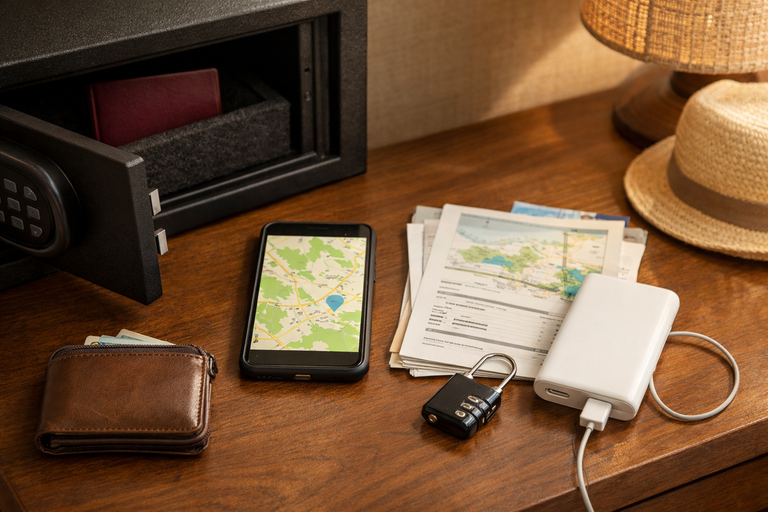
Yes. $100 is a lot to carry day to day in Kenya, where small purchases usually run on cash. Split it between bags, keep a small day wallet and leave the rest in a hotel safe.
Understanding safety risks by region and type of holiday
Kenya's risk level changes with where you go and how you travel. Treat it as several destinations, not one. A guided safari in the Maasai Mara or a beach week in Diani is a different proposition from a self-drive trip through remote northern counties.
Nairobi and the main resort strips carry the usual tourist-area crime: bag-snatching, phone theft and card fraud. Safari lodges and conservancies are generally calm. Long road transfers between parks, and any night driving outside towns, raise the risk.
UK Foreign Office advice names particular counties and border areas to avoid. Read the current list before you fix an itinerary. Signal also thins out in remote places. Check Safaricom coverage before you rely on a phone in an emergency.
How can you protect your passport, money, phone and luggage?
Split your valuables, carry copies, and never leave bags unattended. Leave your passport in the hotel safe when you don't need it. Carry a printed copy and a photo of the details page. Spread cash and cards across two places, not one wallet.
Use ATMs inside banks or shopping centres in daylight. Keep your phone out of sight on busy Nairobi streets and at traffic lights, where snatching happens. If you need directions, step inside a shop or café rather than standing on the pavement studying your screen.
Lock your luggage and label it inside and out. Politely refuse unsolicited help with bags at airports or bus stations.
Which transport options are safest for getting around Kenya?
For most UK visitors, the safest choices are domestic flights for long distances, pre-booked transfers, and licensed taxis or ride-hailing apps in towns. For safari, use a reputable operator’s 4x4 with a known driver.

Avoid unlicensed taxis and motorbike taxis (boda bodas), especially at night. Share your route and vehicle details with a contact. Keep your phone charged and your data working so you can follow the route on a map yourself.
Do I need a visa for Kenya?
UK visitors normally need an electronic travel authorisation (ETA), not a traditional visa. Apply through Kenya’s official ETA portal and recheck Kenya ETA and language rules before departure.
What are the top 3 causes of death in Kenya?
The exact top three vary by year and age group. Common leading categories are infectious diseases, cardiovascular conditions and injuries. For travellers, road injuries and malaria in risk areas are the practical preventable risks.
Common tourist scams and practical ways to avoid them
Most scams in Kenya are opportunistic, not violent. A few habits stop nearly all of them. The usual ones are fake guides who attach themselves to you at stations, taxi drivers quoting a price several times the going rate, and strangers offering to "help" with a phone, an ATM card or your ticket.
Agree the fare before you get in, or book through a ride-hailing app and check the plate. Keep small notes for daily spending and leave the rest in your hotel safe. Never hand your phone or card to someone you have just met. Use bank ATMs inside malls or staffed branches, not on-street machines.
Walk with purpose, avoid quiet streets after dark, and check that a hotel or tour agent has a verifiable address and reviews before you pay any deposit.
Knowing the route and the going rate before you set off means you can check prices and bookings yourself, not rely on strangers for directions.
Staying connected with a Safaricom eSIM in Kenya and sharing your plans
A Kenyan Safaricom eSIM gets you online as soon as you land, and a simple shared itinerary is the quickest safety measure you can take. Buy and install the best eSIM for a Kenya safari before you fly so you can call your hotel, book a taxi and reach your embassy without hunting for a shop in arrivals.
Give one or two people at home your flight numbers, accommodation addresses and daily outline, plus a copy of your passport photo page. Agree a check-in rhythm — a message each evening is usually enough — and pass on your Kenyan number once it is active. Keep a screenshot of key contacts offline in case signal drops.
Save local emergency numbers (999 or 112) and the British High Commission in Nairobi in your phone notes. If plans change, send a quick update rather than letting a silence worry anyone.
What should you do if an emergency happens in Kenya?
Call 999 or 112 for police, ambulance or fire. Then ring your travel insurer and, if you need consular help, the British High Commission in Nairobi. Both numbers work from a UK mobile on roaming, but only if your line is active and in credit. Check that before you fly, not during a crisis.
If you're the victim of a crime, report it at the nearest police station and ask for a written abstract; insurers usually ask for one. For a lost or stolen passport, the High Commission can issue an emergency travel document. Book an appointment and bring a police report and passport photos.
Notify your bank and insurer the same day, and keep photos of your policy and passport on a second device. Check before you fly that your phone will work on a Kenyan network — a Kenya eSIM gives you a backup line for calls and data if your usual number fails.
Kenya travel safety FAQs for UK visitors
Kenya is a workable destination for UK travellers, but "safe" depends on where you go, how you move around and how current your information is. These two questions come up most often.
Is it okay to travel to Kenya now?
Yes for the main tourist routes — Nairobi, the Maasai Mara, Amboseli, Diani and the coast — provided you read the FCDO's Kenya travel advice before booking and again in the fortnight before you fly. It flags specific counties and border areas where the guidance differs, and UK insurers expect you to have followed it. If your itinerary touches an area under advisory, change the route or ask your operator how they manage it.
What should I sort out before I set off?
Save your passport, insurance and embassy details offline. Send a trusted contact your route and expected check-in times. Sort phone data in advance, too, so maps and emergency numbers work the moment you land.
If something feels unclear, ask your operator or insurer before departure, not on a dirt road.
